
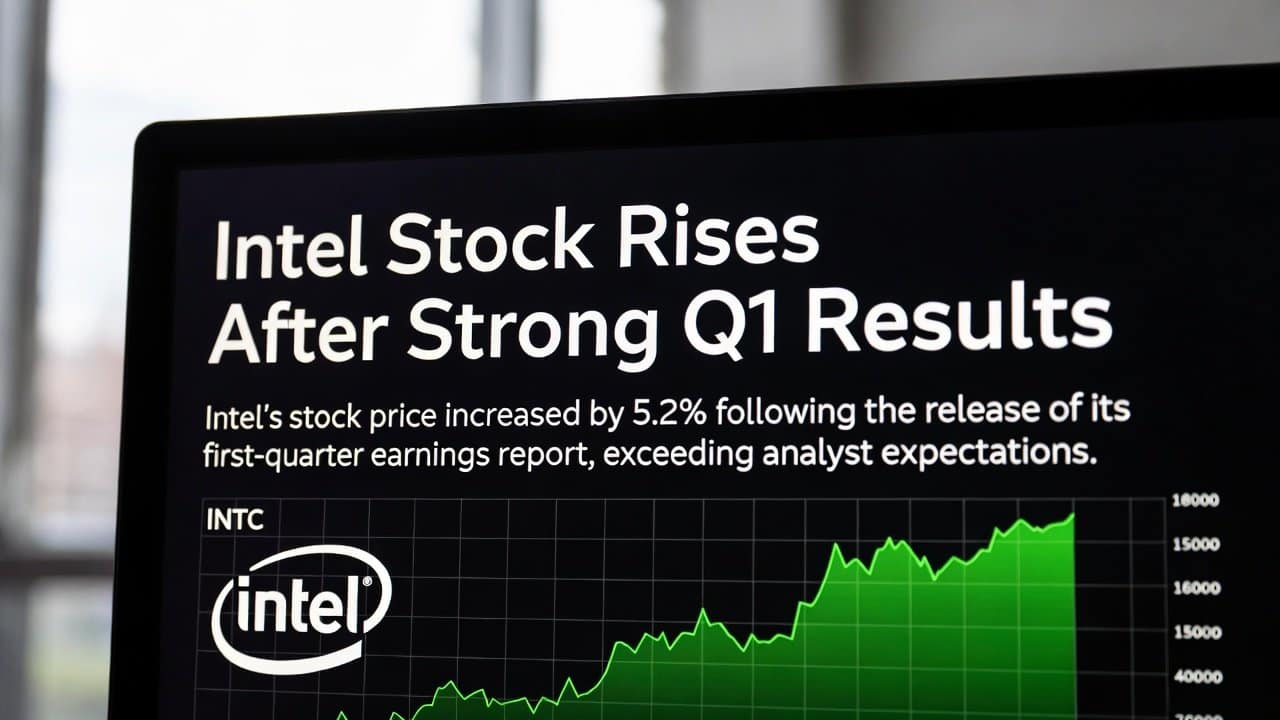
Intel stock is back in focus after the company released its first-quarter 2026 results, and the numbers gave investors a real reason to pay attention. The move was not built on rumors or social media talk. It came after Intel reported higher revenue, stronger demand for its chips, and a better outlook for the next quarter.
For a company that has spent years trying to rebuild trust, this update matters. It shows that Intel is not only cutting costs or talking about a turnaround. It is showing progress in areas that can affect future growth.
What Is Driving Intel Stock Today
Intel reported first-quarter revenue of $13.6 billion, up 7% from the same period last year. That is one of the main reasons the stock gained attention. Revenue growth tells the market that customer demand is improving, especially at a time when chip companies are being judged closely on their role in AI and data centers.
The company also reported a GAAP loss per share of $0.73, but its non-GAAP earnings per share came in at $0.29. That difference is important because Intel’s adjusted figure removes certain costs and gives investors another view of how the core business performed. Intel also said it generated $1.1 billion in cash from operations during the quarter.
How AI Demand Is Supporting Intel’s Business
A big part of Intel’s latest story is AI. Intel said demand for CPUs and advanced packaging is rising as AI moves closer to everyday use, including inference and agentic AI. CEO Lip-Bu Tan said this shift is increasing the need for Intel’s CPUs, wafer offerings, and advanced packaging.
This matters because many people link AI only with GPUs, but CPUs still play a key role in data centers and large computing systems. Intel’s Data Center and AI segment brought in $5.1 billion, up 22% year over year. That was one of the strongest parts of the report and a major reason investors are watching Intel stock again.
Intel’s Core Business Still Has Weight
Intel’s Client Computing Group, which includes PC-related products, reported $7.7 billion in revenue, up 1% year over year. That growth is smaller than the data center side, but it still shows that Intel’s older and more familiar business remains important.
The company also reported $5.4 billion in Intel Foundry revenue, up 16% year over year. Foundry is a key part of Intel’s long-term plan because it gives the company a way to make chips for more customers, not only for its own products.
The Q2 Outlook Looks Better
Intel’s next-quarter forecast added more fuel to the stock move. The company expects second-quarter 2026 revenue of $13.8 billion to $14.8 billion. It also expects GAAP EPS of $0.08 and non-GAAP EPS of $0.20.
That guidance gives the market a clearer reason to stay interested. Investors usually want to know whether one strong quarter can carry into the next one. Intel’s own outlook suggests the company expects demand to remain healthy.
What Comes Next for Intel’s Turnaround Story
The main question now is whether Intel can turn this demand into steady profit growth. Revenue is rising, AI demand is helping, and the outlook is stronger. But the company still reported a GAAP loss, which means investors will keep watching costs, margins, and execution closely.
Intel’s stock’s latest move is not just about one headline. It is about signs that the company’s turnaround may be gaining real support from its products, its data center business, and its foundry plans. The next few quarters will show whether this momentum can hold.