
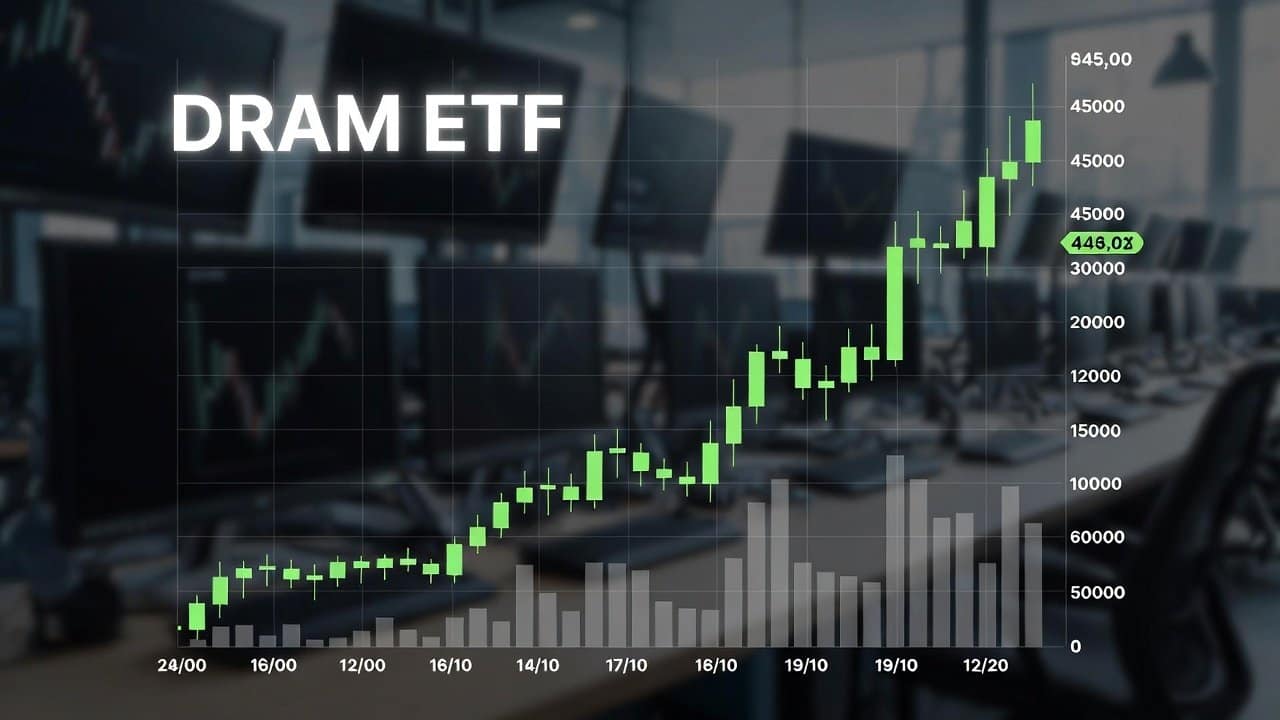
The DRAM ticker is not just another chip name on a screen. It is the Roundhill Memory ETF, a fund built around companies that make and supply computer memory for modern tech, including AI systems, servers, phones, laptops, and data centers.
Roundhill says DRAM is the first memory stock ETF, and Cboe lists it under the ticker DRAM. The fund started trading on April 2, 2026, on Cboe BZX. Its goal is to give investors focused access to global memory chip companies, instead of mixing them into a broader chip fund.
Why This Ticker Is Getting So Much Attention
Memory is no longer just a small part inside a device. It now plays a bigger role in how fast AI systems can work, how much data they can handle, and how well large computing systems perform.
Roundhill’s own material says memory and storage are tied to the long buildout of AI infrastructure. The fund focuses on companies producing and supplying HBM, NAND, and DRAM. In everyday terms, these are different kinds of memory and storage used to move and hold data inside powerful computers.
The early demand for the ETF was also strong. Roundhill announced that DRAM passed $1 billion in assets under management in only 10 trading days after launch. The company also said the fund had averaged $213 million in daily trading volume by that point.
What DRAM Actually Owns
DRAM is a small and focused fund. Roundhill’s fact sheet listed nine holdings as of April 2, 2026. The biggest names were Samsung Electronics, SK hynix, and Micron Technology. Together, these three made up more than 70% of the listed weight at that time.
That matters because this is not a wide fund with hundreds of companies. It is built for people who want direct exposure to memory chip makers. That can make the story easier to understand, but it can also make the fund more sensitive to sharp moves in a few stocks.
The same fact sheet showed the fund had large exposure to South Korea and the United States, followed by Taiwan and Japan. It also listed an expense ratio of 0.65%.
The Memory Price Story Behind the Buzz
The wider DRAM market has also been active. DRAMeXchange, a memory market data source, listed DDR5 16Gb 4800/5600 spot pricing on May 11, 2026, with a session average of 40.200 and a session change of 0.92%.
That kind of price data helps explain why memory is getting more attention. When demand is high and supply is tight, memory companies can become more important to the tech supply chain. This is also why investors are watching funds like DRAM closely.
The Catch Buyers Should Respect
DRAM may sound exciting, but it is not a low-risk idea. Roundhill’s own risk section says memory companies can face pricing swings, supply chain issues, technical problems, export controls, fast changes in tech, and strong competition.
The fund is also actively managed and non-diversified. That means its results depend on the choices made by the manager, and a drop in one major holding can have a bigger effect than it would in a broader fund.
Conclusion
DRAM is getting attention because it gives focused access to one of the hottest parts of the chip market: memory. The official fund details show a clear theme, a short list of major holdings, and a direct link to AI-driven memory demand.
Still, this is not a set-it-and-forget-it fund for everyone. The same focus that makes DRAM interesting can also make it more volatile. Anyone looking at it should check the latest holdings, fees, price, premium or discount, and risk details before making a move.