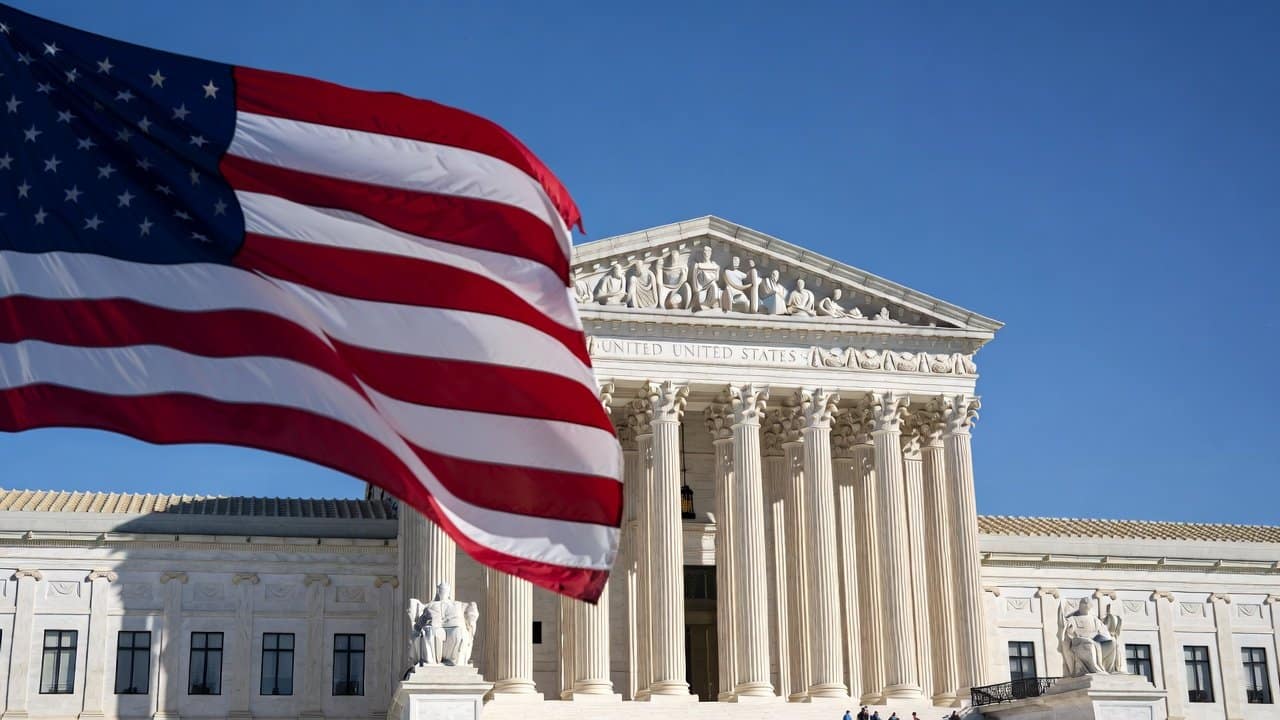
The Supreme Court has handed down a major decision on trade and presidential power. In a 6-to-3 ruling released Friday, the justices struck down President Trump’s global tariff plan, saying he went beyond the authority that federal law gives the White House.
At the center of the case is a 1977 law called the International Emergency Economic Powers Act, often shortened to IEEPA. The Court said that law lets a president regulate trade in a true national emergency, but it does not give a blank check to slap tariffs on almost any import, from almost any country, for as long as the president wants.
What the justices decided today
The case grew out of Learning Resources. Trump and a related lawsuit brought by importers and a group of states challenged the tariffs. The justices ruled that IEEPA does not authorize the president to impose and constantly adjust broad tariffs, even when he has declared a trade-related “emergency.”
Chief Justice John Roberts wrote the majority opinion. He explained that when Congress passed IEEPA, it focused on tools like freezing assets and blocking specific transactions, not on giving the president his own independent power to tax imports. The Court stressed that tariffs are a form of tax, and the Constitution gives the power to tax to the United States Congress, not to the president acting alone.
Roberts, joined by two conservative and three liberal justices, also leaned on what lawyers call the “major questions” doctrine. In simple terms, that idea says: if a president wants to use an old law to take a huge step with a big economic or political impact, Congress must have spoken clearly. In this case, the majority said Congress never clearly handed over general tariff power through IEEPA.
Justice Brett Kavanaugh wrote the main dissent, joined by Justices Clarence Thomas and Samuel Alito. He argued that tariffs are a classic way to regulate imports, so they should fit within IEEPA’s broad language, and warned that the ruling could trigger a wave of refund claims and uncertainty.
How the ruling reins in presidential power
This decision is not only about trade; it is also about the limits on the White House. The Court repeated a basic rule: when a president wants to reshape a large part of the economy, he must point to clear permission from Congress.
For years, presidents of both parties have tested the edges of emergency powers. By rejecting this use of IEEPA, the Court signaled that it is willing to push back when those powers become a tool for broad domestic policy, not just true emergencies from abroad. Legal analysts note that the Court has used the same approach in recent years to limit big environmental and student loan actions by earlier administrations.
At the same time, the ruling is narrow in one important way. The majority did not say that presidents can never use tariffs aggressively. It said only that this particular emergency law is not the place to find that power. Other trade laws that explicitly deal with national security or unfair trade practices remain on the books and could still support more targeted tariffs.
What this could mean for prices and businesses
For everyday shoppers, the most direct question is simple: Will prices fall? The answer is “maybe, but not right away.” The tariffs covered a wide range of goods, from consumer items to industrial products. Economists estimate that duties collected under IEEPA-based tariffs have already added up to more than 175 billion dollars.
The Court did not spell out how that money should be handled. It left to the government and the lower courts the hard problem of whether, and how, importers should get refunds. One dissenting opinion warned that sending all that money back could be “a mess,” especially where importers already passed the cost on to retailers and customers.
Large retailers, including companies such as Costco, and many small firms that import goods, have welcomed the ruling. They argue that the tariffs raised costs, squeezed margins, and made planning almost impossible because rates could change quickly by presidential order.
For now, people who buy imported products in the United States may not see instant price cuts. Companies will wait to see how quickly the administration rolls back the tariffs that relied on IEEPA and whether any new measures replace them under different laws.
What to watch next
The administration has already signaled that it will look to other trade tools to keep parts of its tariff program alive, such as laws that let presidents respond to national security threats or to unfair trade by other countries.
Congress could also step in. Lawmakers unhappy with the ruling could try to write a new statute that more clearly hands specific tariff power to the president. Others, concerned about any further expansion of emergency powers, may push in the opposite direction and tighten the rules. Reports from think tanks and trade groups suggest that the decision will spur fresh debate on how much flexibility presidents should have in future crises.
For now, one thing is clear: this ruling resets the balance between the White House and Congress on trade, and it sends a message that emergency laws are not a shortcut for sweeping economic moves. As refund fights, new tariff strategies, and possible legislation all unfold, Americans will feel the impact on store shelves, in business plans, and in the broader economy over the months ahead.