
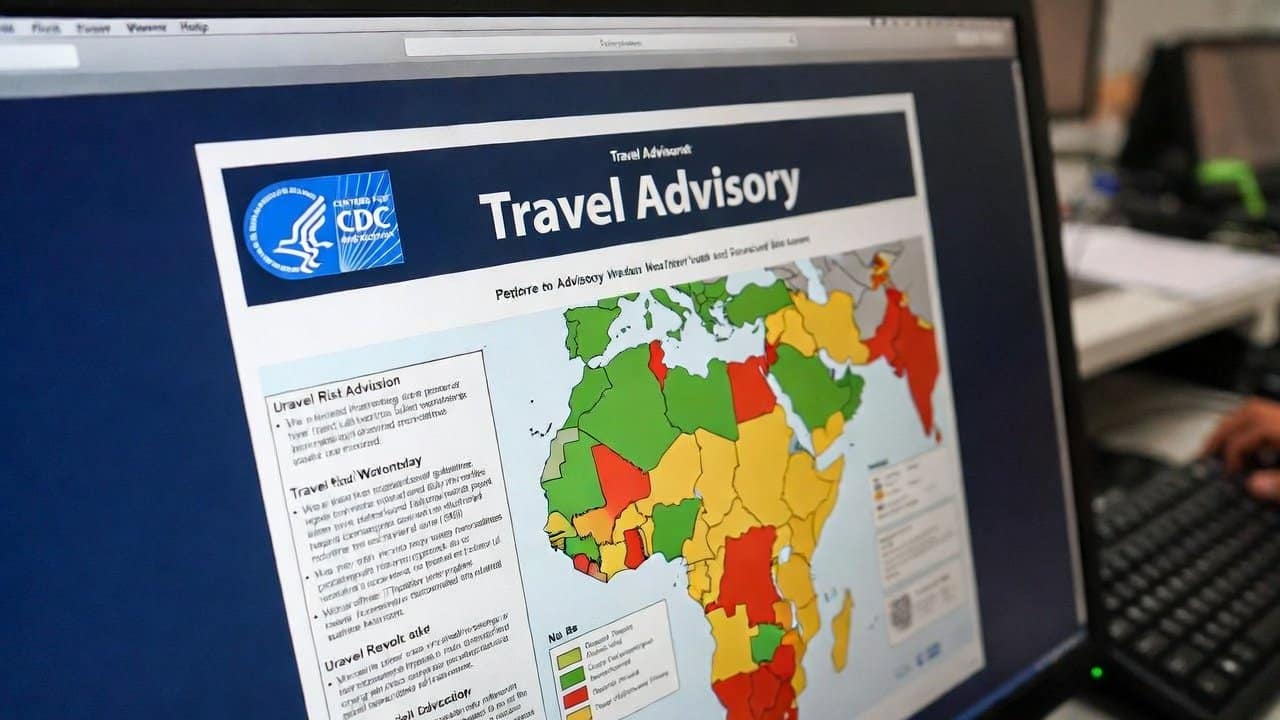
If you plan a trip right now, you have likely seen “CDC travel advisory” trending. It does not have to stop your plans. It should simply shape how you prepare.
How CDC Travel Advisories Work
The Centers for Disease Control and Prevention uses Travel Health Notices to warn travelers about health risks in other countries and regions. These notices sit on the CDC Travelers’ Health website and show alerts by country or by disease.
There are four main levels:
- Level 1 covers usual precautions like routine vaccines and hygiene.
- Level 2 means extra care, such as stronger mosquito protection or added shots.
- Levels 3 and 4 warn you to limit or avoid travel.
Right now, almost all active CDC advisories are at Levels 1 or 2, with none at Levels 3 or 4.
The New Warnings On Chikungunya
The latest attention comes from mosquito-borne disease in warm holiday spots. On February 11 2026, the CDC updated its chikungunya risk map. It now highlights outbreaks in Bolivia, Cuba, Seychelles, Sri Lanka, and Suriname. Each one carries a Level 2 travel notice. Chikungunya is a virus spread by mosquito bites that often causes high fever, severe joint pain, and long-lasting tiredness.
For U.S. travelers, Cuba stands out. As of early February, Florida has reported 16 chikungunya cases with symptoms starting this year. Almost all involve people who recently traveled from Cuba. State health officials have also confirmed one recent locally spread case in Miami-Dade County.
Because of this risk, the CDC still keeps a Level 2 notice for Cuba. Prevent mosquito bites, wear long sleeves and trousers, and use a reliable insect repellent. The CDC also notes that there is now a chikungunya vaccine and suggests that some travelers talk with a vaccine specialist about whether it makes sense for their trip.
Other CDC advisories also matter. There are Level 2 notices for yellow fever in parts of Colombia. CDC also flags global polio circulation in many countries and diphtheria outbreaks in places such as Guinea and Nigeria. Each one comes with clear guidance on vaccines and basic safety steps.
Conclusion
If you plan a trip outside the United States in the next few months, remember these alerts. First, look up your destination on the CDC Travelers’ Health site and read any current notices. Check the advisory level and the suggested actions.
Next, review your vaccines with your doctor or a travel clinic. Ask about polio, measles, yellow fever, and chikungunya if they match the places you will visit. Then plan simple daily habits. Pack repellent, long clothing, and basic first aid. Choose stays with screens or air conditioning where possible.
A CDC travel advisory is not a reason to panic. It is a signal to travel with your eyes open. If you stay informed and take the steps that fit your destination, you can still enjoy your trip. You also protect your health.
Information here is based on CDC and state health updates available on February 12 2026. Always check the CDC site or your local health department for changes before you travel.