
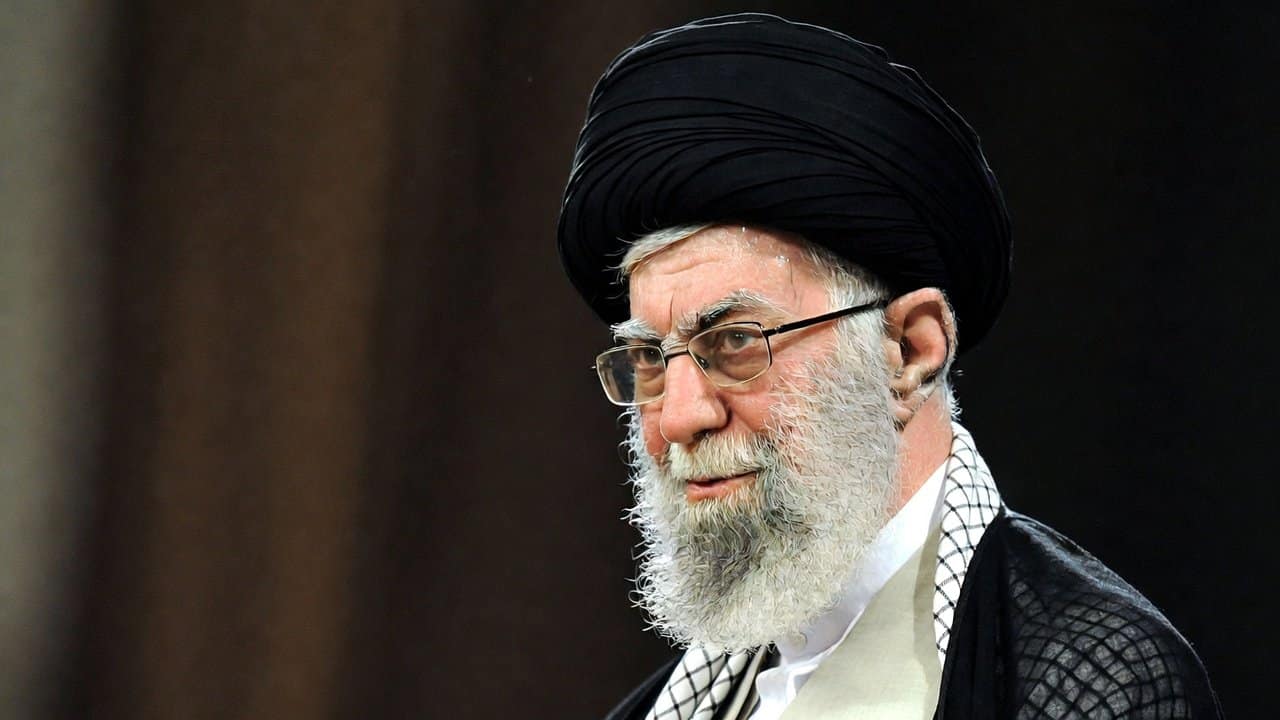
Why Mojtaba Khamenei Is Suddenly All Over The News
London-based outlet Iran International reported that Iran’s Assembly of Experts elected him as the next Supreme Leader, allegedly under pressure from the Revolutionary Guards, citing unnamed “informed sources.”
Asia-based publication Asia Times amplified that claim on Wednesday, describing Mojtaba as the choice of the Assembly after the killing of his father, Ali Khamenei, in joint U.S.-Israeli airstrikes. The article notes that the report rests on opposition media and that confirmation from inside Iran is still awaited.
India-based The Economic Times, in a piece published for U.S. readers roughly two hours ago, framed Mojtaba as “new supreme leader of Iran” but clearly based that phrasing on the same Assembly of Experts report rather than on an official Iranian announcement. In other words, the core news driving the trend is a cluster of media reports, not yet a detailed, on-the-record statement from Tehran spelling out his position.
From Shadow Operator To Reported Supreme Leader
For years, Mojtaba has been known inside Iran as the very private son who built influence behind the scenes rather than through elections or public office. Reference works such as Encyclopaedia Britannica describe him as the “shadowy” son of Ali Khamenei who played a commanding role in the Office of the Supreme Leader while staying largely out of public view.
He was born in Mashhad in 1969 and later studied in the religious center of Qom, training as a Shi’a cleric. During the Iran-Iraq war, he briefly served with the Islamic Revolutionary Guard Corps (IRGC), the powerful force that answers directly to the Supreme Leader.
Over time, he became known as his father’s gatekeeper, with deep ties to the IRGC and its volunteer militia, the Basij. Western reporting from Reuters and others has long cast him as a hardline “backroom” figure whose real influence comes from these security networks rather than from formal titles.
Sanctions, Protests And Why His Name Is So Charged
Mojtaba’s name is not new to U.S. officials. In 2019, the U.S. Department of the Treasury sanctioned him along with other members of Ali Khamenei’s inner circle, saying he represented his father in an official capacity despite never holding a public post and worked closely with the IRGC’s Quds Force and the Basij.
Those sanctions described him as part of a “shadow network” that helped advance the regime’s regional operations and internal repression.
His name also appears in accounts of the disputed 2005 and 2009 presidential elections. Researchers and journalists quoted in Britannica and other outlets say Mojtaba backed Mahmoud Ahmadinejad and was accused by reformist politicians of using security connections to help secure his controversial 2009 victory and then guide the crackdown on protesters who filled the streets afterward.
During the 2022 Mahsa Amini protests and the newer 2025 2026 unrest, slogans in Iran singled him out as a symbol of feared hereditary succession, with crowds rejecting the idea of the leadership passing from father to son.
Analysts also point to financial questions. A Bloomberg investigation this year reported on a global property portfolio linked to Mojtaba that grew even as ordinary Iranians faced deep economic pain and sanctions. Allegations over the scale and sources of these assets are contested, but they feed public anger at a time when trust in the clerical elite is already low.
What His Reported Rise Could Mean For The U.S.
For American readers, the key question is what changes if Mojtaba’s reported selection is formally confirmed. Expert commentary collected by The Economic Times and several think tanks stresses that he is seen as a continuity figure who is close to the IRGC and rooted in the same security-first worldview that shaped his father’s rule.
That suggests any leadership by Mojtaba would likely keep Iran on a confrontational path with the United States and Israel, rather than opening the door to rapid political reform.
At the same time, there are serious internal hurdles. Shi’a tradition and Iran’s own recent history both push against hereditary succession in the top job, which is one reason Ali Khamenei himself publicly warned in past years that “dictatorship and hereditary rule” are not Islamic values.
Legal experts quoted in the same coverage note that he has never held a formal political office, which sits awkwardly with constitutional language about the leader’s qualifications.
That mix makes today’s trend more than just a search spike. If the reports are accurate and Iran’s clerical establishment has moved toward Mojtaba, the country may be entering a period where a highly controversial, heavily sanctioned figure tries to turn years of backroom influence into open rule while under direct military pressure from Washington.