
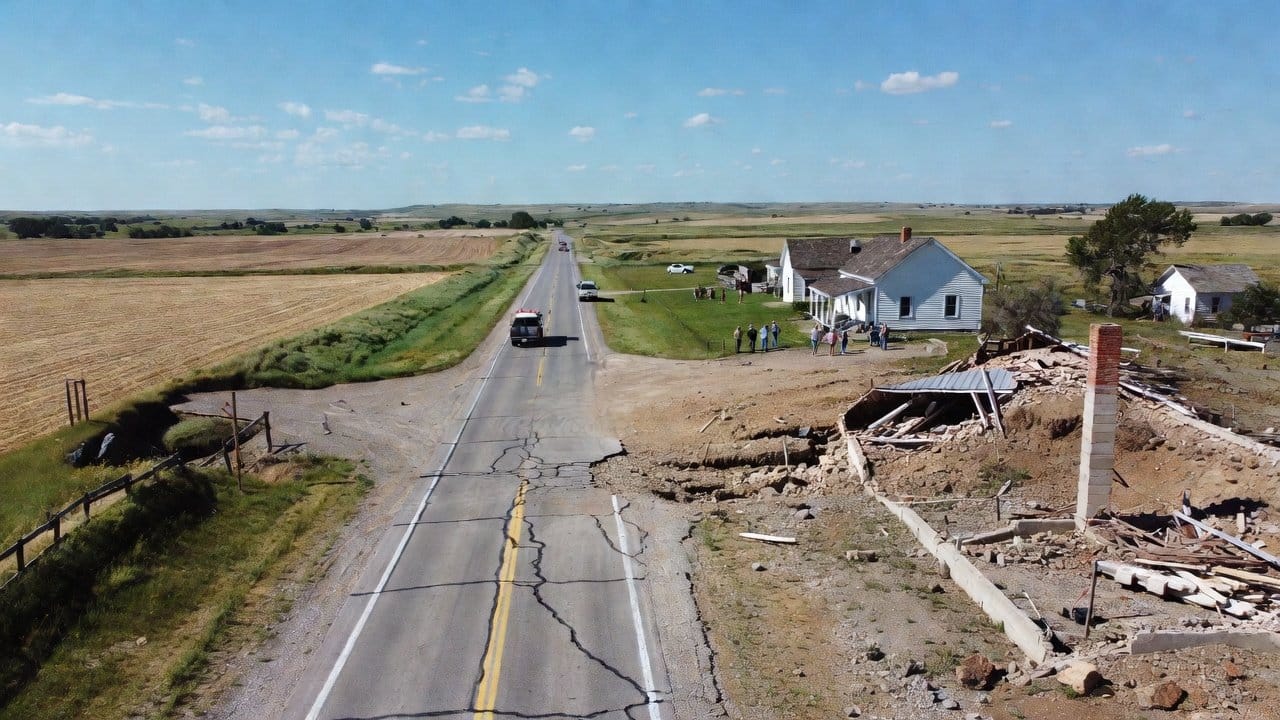
If you felt the floor move in South Central Nebraska this afternoon or saw “Nebraska earthquake” jump on your phone, you are not imagining it. A magnitude 4.1 earthquake was recorded just after lunchtime on Sunday near the village of Cowles in Webster County, close to the Kansas border.
What We Know So Far
According to the U.S. Geological Survey and local TV stations, the quake hit around 12:59 p.m. CST and was centered about 3 miles east of Cowles, south of Hastings. Early USGS data and local coverage put the depth at roughly 2 miles below the surface.
People reported a light but noticeable shake across a wide area. Viewers from small towns like Beaver Crossing all the way to Lincoln said they felt a brief rumble or heard dishes rattle at home. Nebraska Public Media also notes that some reports came from as far away as Omaha and even Manhattan, Kansas.
The main shock was followed by an aftershock of magnitude 2.6 roughly an hour and a half later, a short distance east of the first epicenter. So far, official updates and local reporting have not mentioned any injuries or major damage, which fits what seismologists call a “light” quake on this scale.
How Unusual Is A Quake Like This In Nebraska?
Quakes are not the first thing most people associate with Nebraska, but the state is not completely quiet underground. USGS records describe the region as an area of moderate seismicity, with a history of scattered events going back to the 1800s.
Nebraska Public Media points out that the state typically sees one or two minor earthquakes a year, and the last time Nebraska recorded a quake of magnitude 4 or higher was December 2023, also in Webster County. Earlier reporting on a 2022 quake near Superior explained that south-central Nebraska lies near the Kansas uplift fault system, where built-up stresses in the crust can slip and send out short, sharp jolts even though the region is far from the big plate boundaries out west.
So, a 4.1 event like today’s is uncommon but not unheard of for this part of the state. It is strong enough for people to feel clearly, yet usually not strong enough to cause serious structural damage in most modern buildings.
What This Quake Means For Residents Right Now
For most households, today’s Nebraska earthquake will go down as a startling moment and a story to tell, rather than a life-changing disaster. A shallow 4.1 quake tends to cause brief shaking that may rattle windows, light fixtures, and objects on shelves but does not usually crack foundations or bring walls down, especially in homes built to modern standards.
Even so, the event is a useful reminder that aftershocks are possible, and a second, smaller quake has already been recorded near the first epicenter. If you live within the felt area, it is smart to keep an eye on official alerts from local authorities and the USGS in case more small tremors follow.
Practical Safety Steps After A Small Earthquake
Emergency agencies across the country repeat the same core guidance for any quake, large or small: Drop, Cover, and Hold On when the ground moves, then check your surroundings once the shaking stops.
Here are sensible steps you can take today:
- Look around your home for hazards. Check for broken glass, shifted furniture, or anything that might fall in a stronger quake, such as tall bookcases or unsecured TVs.
- Check gas, water, and power. If you smell gas, hear hissing, or see damaged lines, leave the area and call your utility company or emergency services from a safe spot. Guidance from FEMA and the Red Cross stresses fixing these issues quickly to reduce fire and leak risks.
- Refresh your earthquake plan. Practice Drop, Cover, and Hold On with your family so everyone knows where to go in each room. Official preparedness guides recommend doing this at least once a year.
- Review your insurance. If you own a home in the region, it may be worth asking your insurer what, if anything, is covered if future quakes are stronger.
Today’s Nebraska earthquake is a clear sign that even states in the middle of the country can shake now and then. With verified information from USGS and local newsrooms and a few simple steps at home, residents can stay calm, stay informed, and be better prepared the next time the ground moves.