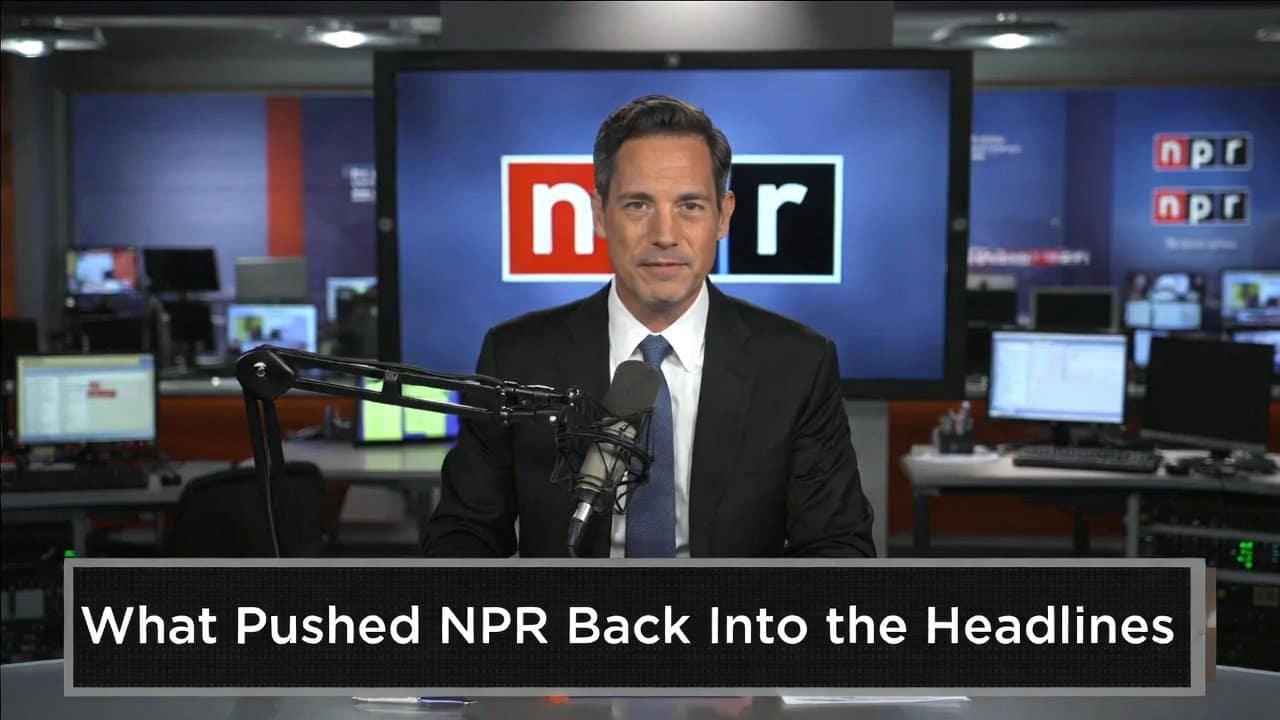
Over the last day, the network’s name has been tied to several big U.S. stories at once. A new national poll on Donald Trump’s second term, an investigation into gaps in the Jeffrey Epstein files, and fresh reporting on the war in Ukraine are all carrying the NPR label.
At the same time, the money that supports public radio is being reworked. For many American listeners, it is a good moment to ask what NPR is, what it is uncovering, and how it stays on the air.
What Is Behind Today’s Surge in Attention for NPR
One driver is an NPR, PBS News, and Marist Poll survey released on February 23, 2026. It finds that, by 57 to 43%, Americans say the state of the union is not strong. Six in ten think the country is worse off than a year ago. The same poll shows broad concern about democracy, with nearly eight in ten respondents seeing a serious threat to its future.
Another spark is a new investigation into how the Justice Department handled its cache of Epstein-related records.
Reporters found that the department withheld some files tied to allegations that Donald Trump sexually abused a minor and removed certain documents from the public database where Epstein accusations are listed, even though federal law requires those records to be public. That kind of accountability story is exactly what pushes people to search for NPR by name.
NPR’s international reporting is also drawing attention. A recent piece from its Kyiv-based team looks at how the war between Russia and Ukraine has dragged into a fourth year of full-scale fighting, forcing millions from their homes and reshaping Russia’s economy under Western sanctions. For U.S. news consumers, these stories land under one familiar banner: NPR.
How NPR Brings National Stories to Your Local Station
NPR is a nonprofit public broadcasting organization based in Washington, D.C., with a second major hub in Culver City, California. It serves as a national syndicator for more than 1,000 public radio stations across the United States, plus U.S. territories.
Funding comes from a mix of station membership dues, corporate underwriting, and federal grants that have flowed through the publicly funded Corporation for Public Broadcasting. Most member stations are owned by nonprofit groups such as universities and school districts, and NPR states that it keeps full editorial control over its journalism, independent of government and corporate influence.
Flagship news shows like Morning Edition and All Things Considered anchor the radio schedule, while podcasts such as Up First and Planet Money carry the brand into on-demand audio. As of 2022, NPR’s own audience data show about 30.7 million listeners tuning in each week across its station network, even after a drop from a 2017 high.
Digital listening keeps rising. The NPR One app and website let people stream local stations and news shows on phones, car dashboards, smartwatches, smart TVs and smart speakers, with support for platforms ranging from Apple CarPlay and Android Auto to Amazon Alexa.
How Public Radio Funding Is Changing in 2026
The current spotlight is not only about content. It is also about who pays. For decades, the Corporation for Public Broadcasting sent federal money to public TV and radio, including NPR member stations.
In 2025, during Donald Trump’s second term, Executive Order 14290 directed federal agencies to stop transferring appropriated funds to CPB and other public broadcasters, challenging the funding model created under the 1967 Public Broadcasting Act.
The Rescissions Act of 2025 then cut and reshaped that support and set a path for CPB to wind down. In January 2026, CPB’s board voted to dissolve the organization entirely.
A related settlement from late 2025 calls for NPR to receive about 36 million dollars in federal funds to operate the national public radio interconnection system that links stations around the country, even as CPB itself prepares to disappear.
Station leaders are now watching how future money will flow, and what it will mean for transmitters, reporters, and the national shows they carry every day.
For listeners, the simplest way to keep hearing this reporting is still to support local stations. Outlets such as WYPR in Baltimore and WYSO in Ohio invite memberships, one-time and monthly gifts, vehicle donations, and business underwriting, and many now offer premium options like the NPR+ podcast bundle as a thank-you to sustaining donors.
Those contributions not only unlock extra listening for supporters, but they also help pay for the investigations, daily news updates, and local stories that brought “NPR” back onto the trending list in the first place. If you rely on this network for national and local coverage, this moment is a reminder that its future is tied to people who decide it is worth backing.