
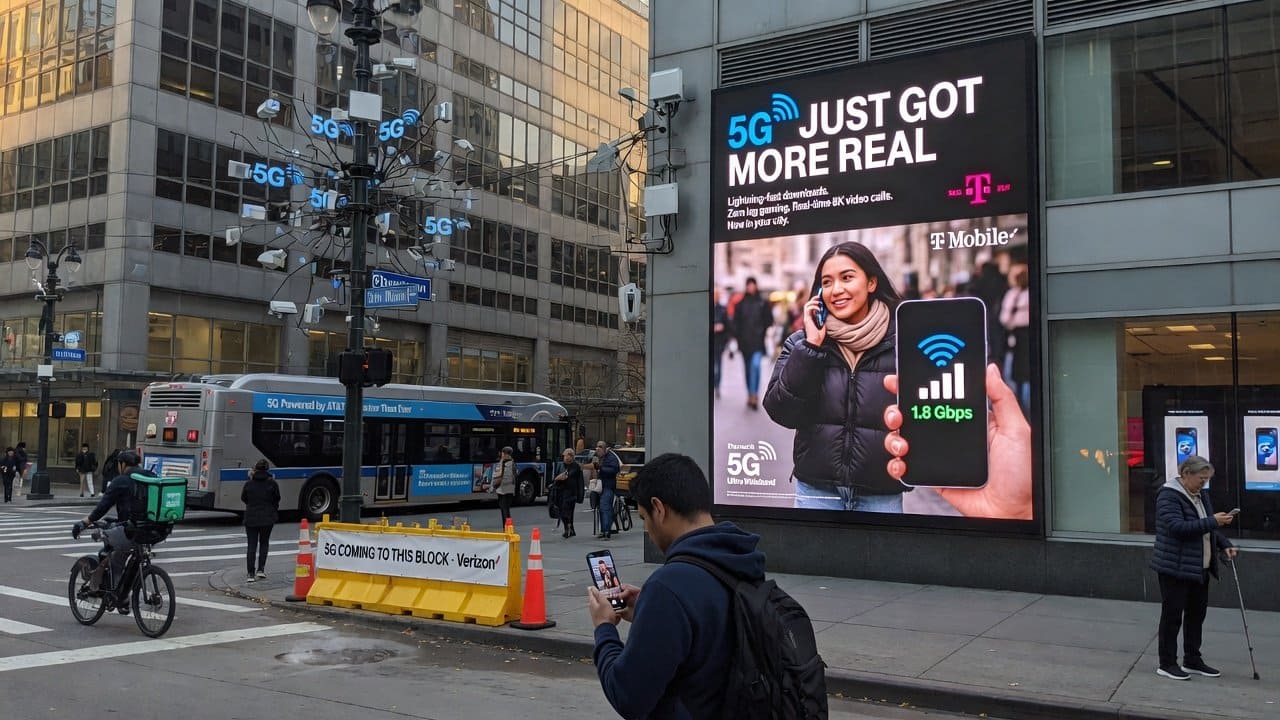
The biggest 5G story right now is not about a flashy new phone. It is about something most people never see, but feel every day: stronger wireless capacity. On May 12, 2026, the FCC approved two EchoStar spectrum deals tied to AT&T and SpaceX, with a combined value of more than $40 billion.
The FCC said the move covers about 115 megahertz of underused spectrum and is meant to support faster internet, stronger competition, rural service, and new direct-to-device service from low-earth orbit satellites.
The Airwaves Behind Better 5G
A wireless network needs spectrum the way a road needs lanes. More usable spectrum can help carriers handle more data, more phones, and more home internet demand without making the network feel crowded.
In this latest approval, EchoStar is selling about 50 megahertz of nationwide spectrum to AT&T for its 5G network. The package includes about 30 megahertz of 3.45 GHz mid-band spectrum and about 20 megahertz of 600 MHz low-band spectrum. EchoStar is also selling about 65 megahertz of nationwide spectrum to SpaceX for Starlink’s next direct-to-device service.
Why AT&T’s Part Matters for Daily Use
AT&T’s piece of the deal matters because it connects directly to the services people pay for: phone plans, mobile data, and fixed wireless home internet.
The FCC said AT&T will use the spectrum to speed up 5G and fixed wireless deployment for in-home broadband, manufacturing hubs, energy sectors, and small businesses. The agency also said AT&T had already deployed EchoStar’s 3.45 GHz spectrum across 23,000 sites, with 5G download speeds boosted by up to 80 percent nationwide.
That does not mean every phone will suddenly feel twice as fast everywhere. Wireless service still depends on your device, your plan, your location, nearby network traffic, and whether the upgraded spectrum is active where you live or work. Still, the direction is clear: more spectrum gives a network more room to carry real demand.
Why SpaceX Is Now in the 5G Talk
SpaceX’s part of the deal brings satellite service into the 5G conversation in a bigger way. The FCC said direct-to-device service can let smartphones and connected devices link directly to satellites, especially in remote and underserved areas. Under the approval, SpaceX gains access to exclusive-use, contiguous nationwide spectrum for Starlink direct-to-device service and other offerings.
This is important because phone coverage has always had gaps. Mountains, long highways, rural land, storms, and thin tower coverage can still leave people stuck with weak service. Direct-to-device service aims to close some of those gaps over time. It is not a magic fix today, but it points to a future where a phone may have more ways to stay connected when towers are not close enough.
What to Check Before Paying for 5G
A 5G label on a plan is not enough. Before switching phone or home internet service, check the carrier’s coverage at your exact address, not just your city. Look at the places where you actually use your phone: home, work, school, main roads, and weekend spots.
Also, check whether your current phone supports the 5G service your carrier offers. A newer plan will not help much if the device cannot use the right network bands. For home internet, confirm the service is available at your address and review expected speeds, data rules, equipment costs, and cancellation terms.
Conclusion
This FCC approval gives 5G more room to grow. AT&T gets spectrum that can support faster mobile service and more home internet options.
SpaceX gets spectrum tied to phone-to-satellite service. For customers, the smartest move is not to buy into hype. The smart move is to choose the plan that works best in the places where you live your real life.