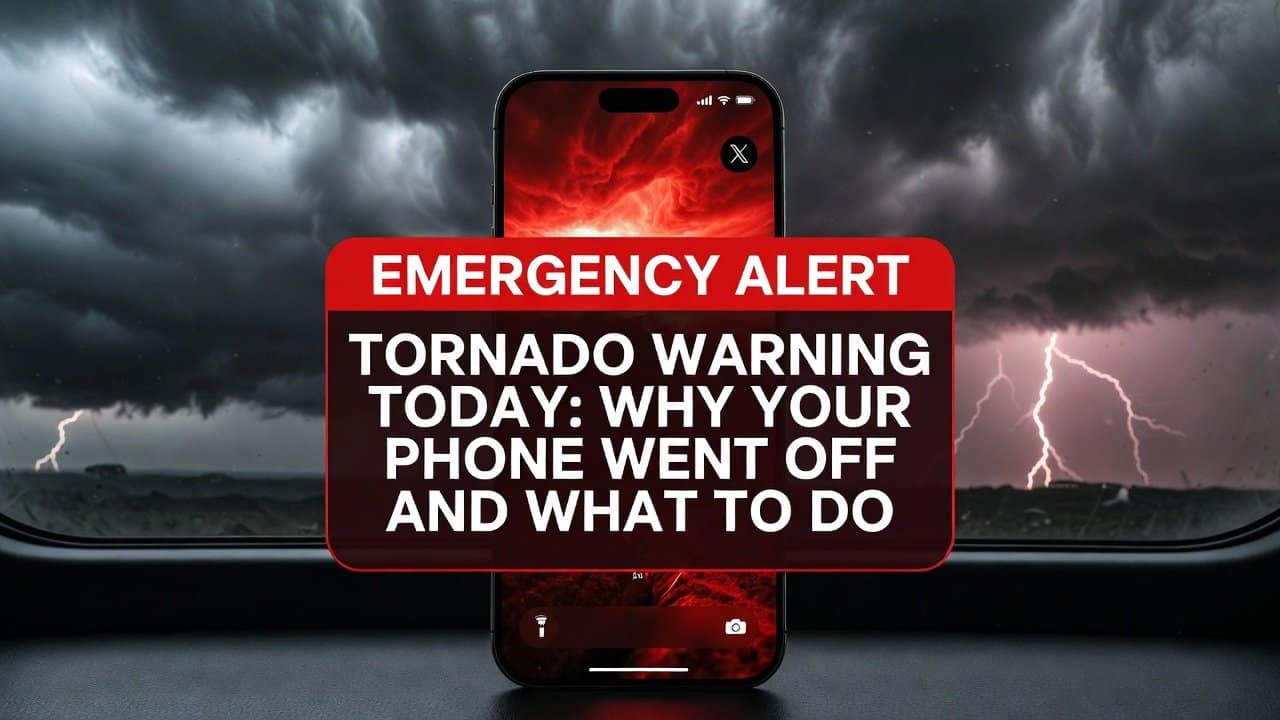
Your phone suddenly screams, the TV cuts to bright red banners, and that two-word phrase flashes on the screen: Tornado Warning. For a lot of people in the US today, those alerts were part of statewide tornado drills, but the wording on some phones looked and felt exactly like a real emergency. In eastern Kentucky, for example, the National Weather Service (NWS) office in Jackson sent out a tornado warning during the scheduled drill, and many people said the alert did not clearly say it was only a test. NWS has said it is reviewing what happened.
At the same time, the broader weather pattern across the central United States is turning stormy. NWS is warning about several rounds of severe thunderstorms from the southern Plains into the Midwest, with large hail, damaging winds, and tornadoes possible through the next few days. All of that makes one thing clear: when “Tornado Warning” appears, you need to know exactly what it means and how to react.
What That Red Tornado Warning Box Means
A tornado warning is not a gentle heads-up. It is the signal to move right now.
The National Weather Service explains it this way: a tornado warning is issued when a tornado has been seen by trained spotters or clearly indicated on radar. It means there is immediate danger to life and property inside the warned area.
A few key points from NWS:
- A tornado watch means conditions are favorable, and you should be ready to act.
- A tornado warning means a tornado is happening or is highly likely in a small, specific area, and you must take shelter at once.
- A tornado emergency is the highest level, used when a violent tornado is already causing confirmed, severe damage in a populated area.
Warnings usually cover an area closer to the size of a city or a small county, not an entire state. That is why every minute counts once the alert hits your phone, TV, radio or weather app.
Why Tornado Warning Alerts Are Firing Today
So why did so many alerts fire today, even when skies were calm?
Across several Midwestern and Southern states, emergency managers and NWS offices scheduled statewide tornado drills as part of Severe Weather Awareness or Preparedness Week. An International Business Times report notes that states including Missouri, Kansas, Kentucky, North Carolina, and Illinois ran coordinated tornado drills on March 4, sounding sirens, sending test codes over NOAA Weather Radio, and asking schools and workplaces to practice sheltering.
In North Carolina and Kentucky, NWS confirmed statewide drills this morning. The state emergency alert system carried the drill across NOAA Weather Radio and local broadcasters, and Kentucky officials said tornado sirens could sound at the discretion of local emergency managers. The NWS Jackson office posted detailed FAQs explaining that the Kentucky drill at 10:07 a.m. EST was meant to activate the Emergency Alert System as if a real warning had been issued, so people could walk through their plans.
All of this is happening as the Storm Prediction Center highlights a multi-day storm setup from March 4 to 6, with slight to enhanced risk areas for severe thunderstorms from Texas through Kansas and into Kentucky. That forecast includes the chance of isolated tornadoes within broader lines of storms.
In short, the drills are practice. The weather pattern is very real. Together, they are a reminder that the next tornado warning you see may not be a test.
Steps To Take When A Tornado Warning Hits
When a tornado warning is issued for your area, do not wait to “see if it gets bad.” Federal agencies and NWS give very clear guidance on what to do.
If you are at home
- Go to the basement. That is the safest spot.
- No basement? Move to a small, interior room on the lowest floor with no windows. A hallway, bathroom, or closet works well.
- Put as many walls as possible between you and the outside.
- Get low, cover your head, and, if you can, protect your body with a mattress, heavy blanket, or sleeping bag. Helmets for kids and adults are strongly encouraged.
If you live in a mobile home
- Do not stay inside. Mobile homes, even when strapped down, are not safe in tornado-level winds.
- Go to the nearest sturdy building well before storms arrive. If there is truly no shelter, lie flat in a low spot like a ditch and shield your head.
If you are at work, school, or in a public place
- Follow the tornado drill instructions you have been given.
- Move to interior hallways or designated safe rooms on the lowest floor and stay away from glass and large open rooms like gyms or auditoriums, which are more likely to suffer roof failure.
If you are driving
- Being on the road is one of the worst places to be during a tornado. NWS and CDC both say you should not try to outrun a tornado.
- If you can safely reach a sturdy building, do that. If not, either stay in the car with your seat belt on, head below window level, or move to a low spot nearby and cover your head.
How To Stay Ready Before The Next Tornado Warning
The safest response starts long before the warning tone plays.
- Pick your safe room now: Decide which interior room or basement spot your family will use, and keep basic supplies there: shoes, flashlights, a battery radio, helmets, and a small kit with water and medications.
- Have more than one way to get alerts: NWS and FEMA encourage people to combine local TV and radio, a NOAA Weather Radio, reliable weather apps, and community sirens. No single system is perfect.
- Treat drills like the real thing: Today’s statewide drills across Kentucky, North Carolina and other states were designed to build muscle memory so the steps feel automatic when seconds matter.
- Pay attention to severe weather outlooks: NOAA’s Storm Prediction Center now includes new “Conditional Intensity” information in its convective outlooks to highlight days when more violent storms are more likely, including high-end tornadoes.
Tornado warnings will never be pleasant to see, but they are meant to give you a narrow window of time to move to safety. The more clearly you understand what that alert means, and the more often you walk through your plan, the better your chances when the next warning is not just a drill.