
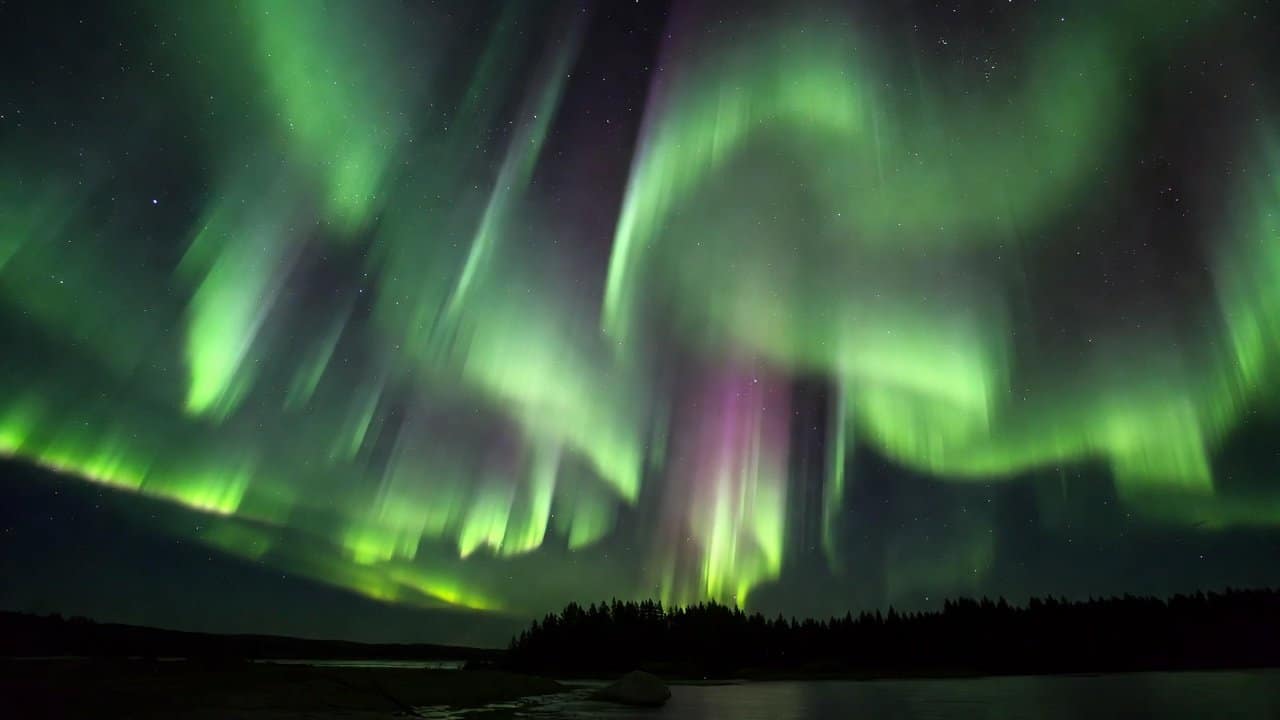
The aurora forecast just got more exciting. NOAA’s Space Weather Prediction Center has issued a G2 moderate geomagnetic storm watch for April 17 to 18, which means northern lights activity could be stronger than usual during the next two nights.
That does not guarantee a bright show everywhere, but it does mean conditions are active enough for many people to keep a close eye on the sky tonight.
NOAA Just Raised the Alert
According to NOAA, the watch is tied to expected coronal hole high-speed stream effects, with G1 to G2 storm conditions likely on April 17 and 18.
In simple words, Earth is expected to be hit by a faster stream of solar wind, and that can push the aurora farther south and make it easier to spot from more places than usual. NOAA’s latest three-day forecast says the highest expected Kp value reaches 6.00, which matches G2 level activity.
When the Sky Could Peak
The strongest forecast blocks in NOAA’s latest update line up with Friday evening into the overnight hours across the U.S.
The forecast shows the highest activity from 00:00 to 06:00 UTC on April 18, which translates to 8 PM to 2 AM Eastern, 7 PM to 1 AM Central, 6 PM to midnight Mountain, and 5 PM to 11 PM Pacific on Friday night. NOAA also shows another strong period just before that, from 5 PM to 8 PM Eastern on Friday.
That timing matters because NOAA says the aurora is usually best between 10 PM and 2 AM local time.
During stronger geomagnetic activity, the viewing window can stretch earlier into the evening and later into the morning, but the darkest late-night hours still tend to give the best chance for a better view.
How Tonight’s Forecast Could Play Out
NOAA’s aurora view line product is built to show the southernmost area where the aurora may be visible on the northern horizon over North America.
It uses the expected maximum Kp between 6 PM and 6 AM Central Time for tonight and tomorrow night. That means tonight’s map is focused on the hours that actually matter for watchers after sunset, not just a general daily average.
There is one important detail people often miss. The aurora does not have to sit directly overhead to be seen. NOAA says it can sometimes be viewed from as far as 1,000 kilometres away when it is bright enough and the conditions are right.
So even if you are not under the center of the oval, a strong burst can still put colour low on the northern horizon. Daylight, cloud cover, city glow, and fast-changing solar wind can still make or break the experience.
What to Check Before You Head Out
The smartest move is to check NOAA’s short-range aurora product close to viewing time. Its 30-minute forecast is based on the OVATION model and gives a near-term look at expected aurora location and intensity.
NOAA also has an aurora dashboard that pulls together the forecast maps for tonight, tomorrow night, recent activity, and the short-term outlook in one place.
Tonight’s bottom line is simple. The latest official forecast supports a real chance for stronger aurora activity, with the best setup centered on Friday night into early Saturday.
That makes this one of those nights where checking the sky is worth the effort. Clear darkness, a northern view, and good timing could make all the difference.