
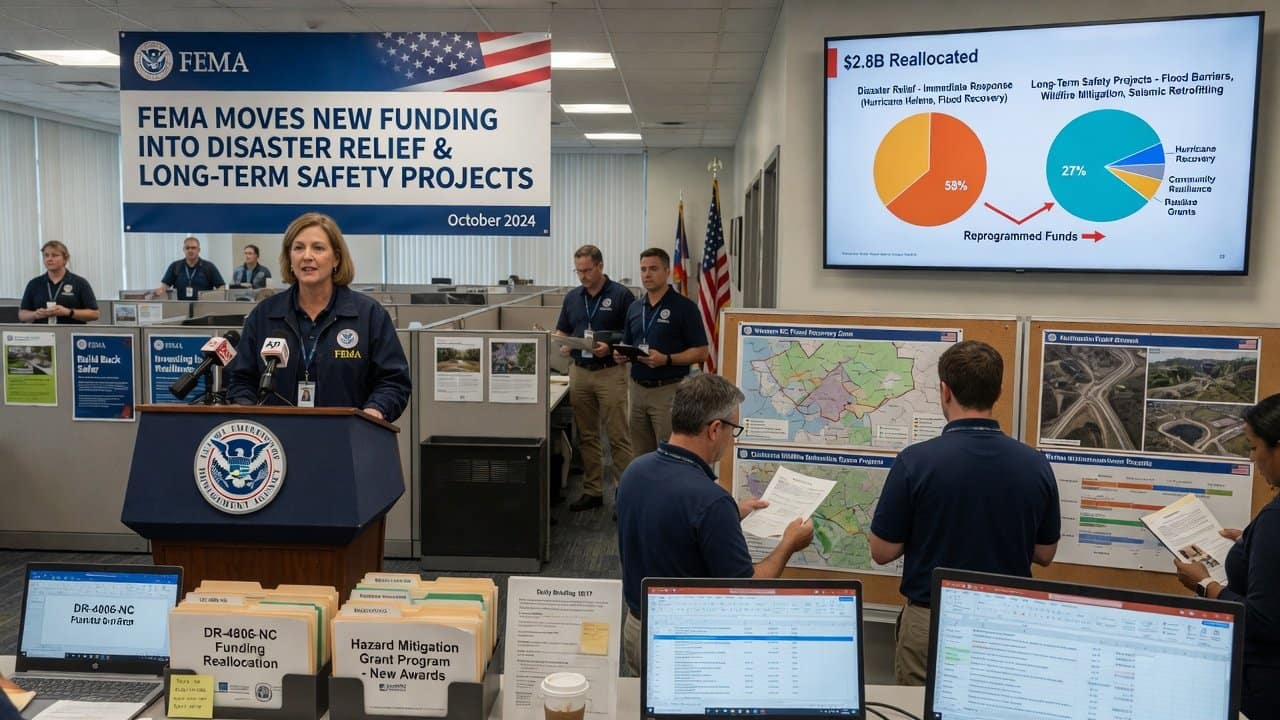
FEMA is back in the national spotlight as fresh federal disaster support moves across several parts of the country. The latest updates show one clear thing: the agency is not only paying for recovery after damage happens. It is also putting money into projects meant to reduce future damage before the next flood, fire, storm, or emergency hits.
That matters because disaster costs do not end when the weather clears. Roads, bridges, homes, power systems, public buildings, water lines, and emergency services can all take a hit. When FEMA approves support, the money can help states, local governments, tribes, and some public groups cover costs that would otherwise fall hard on local budgets.
FEMA Approves $41.5 Million for Safer Communities
On April 27, 2026, FEMA announced more than $41.5 million to support mitigation projects in the Southeast. The release was listed as R4-NR-017, showing it came from FEMA Region 4.
Mitigation may sound like a dry government word, but the idea is very practical. It means fixing weak points before they turn into bigger losses. That can include work to reduce flood risk, protect public buildings, improve drainage, strengthen local systems, or make communities better prepared for future disasters.
This kind of funding is important because recovery is always harder after the damage is already done. A stronger road, safer drainage system, or better public facility can save money, protect lives, and keep services running during a serious event.
FEMA Is Also Helping With Active Wildfire Costs
FEMA has also been involved in Georgia’s wildfire response. The agency authorized federal funds to reimburse Georgia for eligible costs tied to fighting the Pineland Road fire in Clinch and Echols Counties and the Highway 82 fire in Brantley County.
According to the official Georgia governor’s office, FEMA approved Fire Management Assistance Grant declarations for both fires, and a federal Incident Management Team was also being called up to help with the response.
The numbers show why the help was needed. At the time of the requests, the fires had burned more than 11,085 acres of private land and threatened more than 1,050 homes, 50 businesses, and local infrastructure. FEMA’s fire grants can cover up to 75% of eligible firefighting costs, including certain costs for equipment, supplies, field camps, and moving resources in and out of the response area.
For local communities, this type of support can make a real difference. Fighting a large fire takes people, fuel, aircraft, trucks, gear, and long hours. When costs grow fast, federal help can reduce pressure on state and local agencies while emergency teams keep working.
More Disaster Money Is Moving Across States
FEMA’s recent activity is not limited to one region or one type of disaster. On April 22, 2026, the agency announced more than $250 million in federal funding to help states and local communities prevent future disaster damage.
FEMA also announced on April 24, 2026, that federal disaster assistance was available to the Commonwealth of the Northern Mariana Islands after a major disaster declaration.
These updates show FEMA working on several fronts at the same time: recovery, fire response, emergency support, and long-term risk reduction. That is why FEMA news often matters beyond the location named in a single release. A funding decision in one area can show how the agency is handling disaster costs, preparedness, and public safety across the country.
What FEMA Support Can Mean for Local Communities
Most people hear about FEMA after a storm, flood, fire, or other major event. But the agency’s role often begins before the public sees the full cost of a disaster. FEMA can help coordinate federal support, approve certain disaster funds, reimburse eligible emergency costs, and support projects that lower future risk.
That does not mean every loss is covered. FEMA funding usually follows official rules, disaster declarations, grant terms, and cost-share limits. Some help goes to state and local governments. Some may go toward public infrastructure. Some programs may support eligible survivors after a declared disaster.
The key point is this: FEMA funding is not just a government headline. It can affect how fast a damaged area repairs public services, how prepared a town is before the next emergency, and how much pressure local budgets face after a major event.
With new mitigation money, wildfire support, and disaster assistance moving through official channels, FEMA remains a major part of how communities prepare, respond, and recover when serious events hit.