
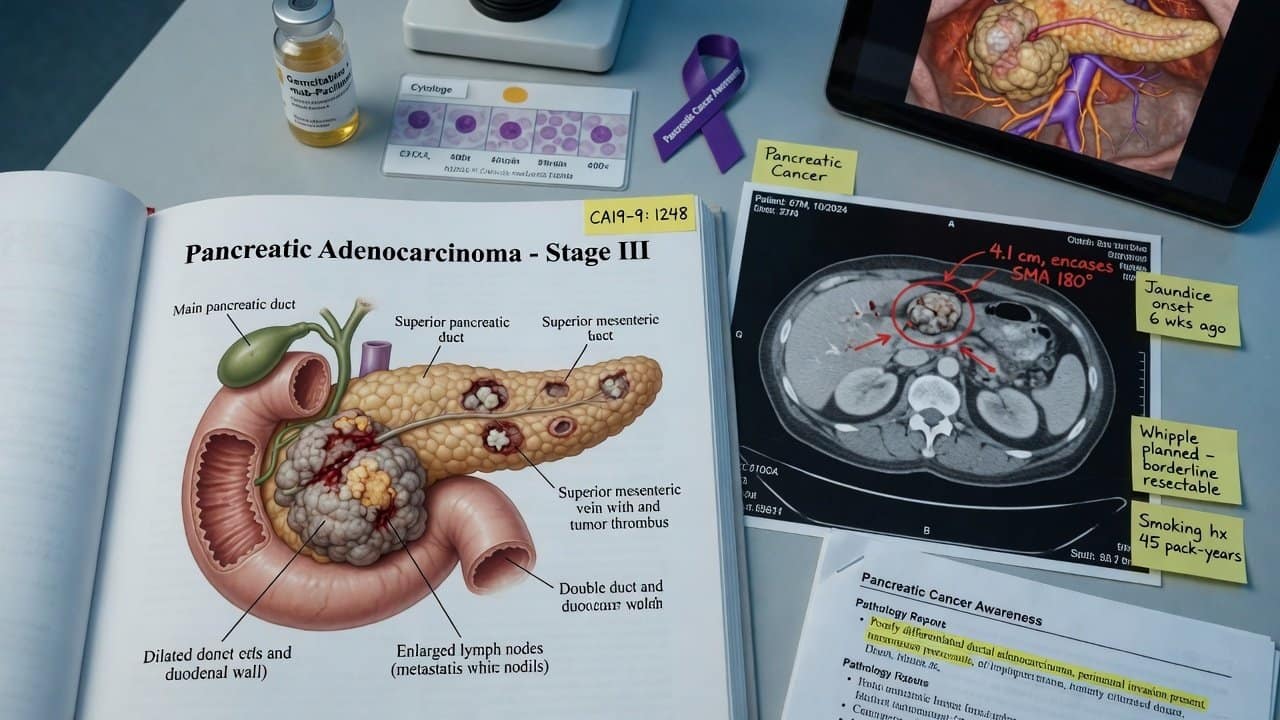
Pancreatic cancer is a health topic that instantly feels serious, and for good reason. The pancreas sits deep inside the belly, behind the stomach. Because of that, early changes can be easy to miss.
A person may not feel anything clear at first, or the signs may look like common stomach trouble.
That is what makes this cancer so hard. It often does not cause strong symptoms until it has grown or spread. The National Cancer Institute says pancreatic cancer can be difficult to diagnose early, and possible signs include jaundice, pain, and weight loss.
Why Pancreatic Cancer Gets So Much Attention
Pancreatic cancer is not the most common cancer, but it is one of the most dangerous. SEER estimates that in 2026, there will be 67,530 new pancreatic cancer cases and 52,740 deaths in the United States. SEER also lists the 5-year relative survival rate at 13.7% for cases diagnosed from 2016 to 2022.
Those numbers explain why doctors take warning signs seriously. The earlier cancer is found, the better the chance of treating it. The American Cancer Society lists the 5-year relative survival rate as 44% when pancreatic cancer is localized, 17% when it is regional, and 3% when it has spread to distant parts of the body.
Symptoms That Should Not Be Brushed Aside
Pancreatic cancer can show up in different ways. Some people notice yellowing of the skin or eyes, which is called jaundice. Others may have belly pain, back pain, weight loss, poor appetite, nausea, vomiting, tiredness, or new diabetes. The American Cancer Society also lists blood clots as a possible sign.
One symptom alone does not mean someone has cancer. Many of these signs can come from other health issues. Still, it is worth paying attention when symptoms are new, do not go away, or appear together.
A good rule is simple: do not wait too long with unexplained weight loss, yellow skin or eyes, ongoing belly or back pain, or sudden changes in appetite. A doctor can decide what tests are needed.
Who May Have a Higher Risk?
Risk does not mean certainty. It only means the chance is higher. The National Cancer Institute lists smoking, health history, and family history among factors that can affect risk. Its professional guidance also notes risk factors such as obesity, chronic pancreatitis, and certain inherited gene changes, including BRCA1, BRCA2, PALB2, and ATM.
Smoking is one of the clearest risks. The American Cancer Society says people who smoke have about twice the risk of pancreatic cancer compared with people who never smoked. It also states that about 25% of pancreatic cancers are thought to be caused by cigarette smoking.
What Doctors Use to Check the Pancreas
There is no single home check for pancreatic cancer. Doctors may use blood tests, imaging tests, and other exams based on symptoms and risk. The National Cancer Institute says tests that examine the pancreas are used to diagnose and stage the disease.
Staging matters because it helps doctors understand where the cancer is and what care may be possible. Treatment can include surgery, chemotherapy, radiation therapy, targeted therapy, or clinical trials, depending on the case.
A New Treatment Access Update
A recent FDA action has also brought new attention to pancreatic cancer treatment. On May 1, 2026, the FDA said it permitted expanded access for daraxonrasib, an investigational drug for patients with previously treated metastatic pancreatic ductal adenocarcinoma.
The FDA received the request from Revolution Medicines on April 28 and signed it on April 30.
This does not mean the drug has full FDA approval. Expanded access is a pathway that may allow some patients with serious or life-threatening diseases to receive an investigational drug when certain conditions are met. The FDA says requests must be submitted by licensed physicians on behalf of eligible patients.
Conclusion
Pancreatic cancer deserves careful attention because it can be quite early and serious later. The best step is not to fear. It is awareness. Know the signs, understand the risks, and talk to a doctor when something feels off or keeps coming back.
For anyone facing a diagnosis, a second opinion can also be helpful. The National Cancer Institute notes that some people choose to get one.