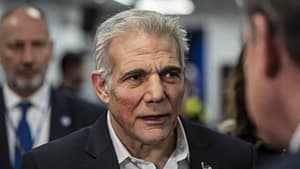

Pete Hegseth is back at the center of a major national security story, and this time the attention is tied to a public military update that carried real weight.
On Monday, April 6, he appeared as part of the latest public message around the Iran conflict and made it clear that the tempo of U.S. action was not slowing down. That alone would have drawn attention.
What pushed this even higher was the timing, the tone, and the fact that his remarks came as the White House also pointed to a hard Tuesday night deadline for Iran.
Why Pete Hegseth Is Back at the Center of the Story
The biggest reason Pete Hegseth is in headlines right now is simple. He publicly signaled that the fighting could grow even more intense the next day. Reuters reported that Hegseth said Monday would bring the heaviest strikes since the Iran conflict began and warned that Tuesday would bring even more.
That statement came as President Donald Trump said Iran faced a Tuesday 8 p.m. EDT deadline to meet U.S. demands tied to nuclear weapons and the Strait of Hormuz.
That made Hegseth more than a background figure in the story. He became one of the clearest public voices explaining how serious the next phase could be.
When a Pentagon chief says the largest volume of strikes is still ahead, people listen closely because it signals that military pressure is still rising, not easing.
The Core Message Behind the Pentagon Statement
The Pentagon’s own briefing gives a fuller picture of what Hegseth wanted the public to hear. In a March 31 Pentagon press briefing posted by the Department of War, he said he had just visited U.S. troops involved in Operation Epic Fury and came away with the view that American firepower was only increasing while Iran’s was decreasing.
He also said the upcoming days would be decisive and added that Iran had very little it could still do militarily to change the situation.
That same official briefing also showed the wider military frame around his remarks. Gen. Dan Caine said the Joint Force had struck more than 11,000 targets over 30 days and was continuing operations against Iran’s missile, drone, naval, and military industrial capabilities. In other words, Hegseth’s comments were not made in isolation.
They matched a broader Pentagon message that the campaign was active, large in scale, and still moving forward.
Another Turning Point That Put More Focus on Hegseth
There was another reason Hegseth drew so much attention. At the White House event on Monday, officials also highlighted the recovery of a downed American airman inside Iran. Reuters reported that Trump described it as a major rescue mission involving large U.S. resources, while Hegseth added that the first message from the airman was, “God is good.”
That moment gave the day a second headline and tied Hegseth to a dramatic military rescue story as well as the broader warning about coming strikes.
Why This Update Matters So Much
What matters most here is not just that Pete Hegseth spoke. It is what he chose to stress. He did not suggest a pause. He did not hint at a softer line.
He pointed to a stronger force, decisive days ahead, and a mission that the Pentagon says is still expanding. The Department of War’s own homepage also featured a “Trump, Hegseth Give Update on Epic Fury” item, which shows how central he is to the administration’s public message right now.
Right now, the cleanest reading of the facts is this: Pete Hegseth is in the spotlight because he is helping deliver one of the administration’s most serious public warnings in the middle of an active conflict. That is why his name is suddenly so hard to miss.
What happens next depends on whether diplomacy moves before the Tuesday night deadline, or whether the Pentagon follows through on the tougher path Hegseth openly described.