
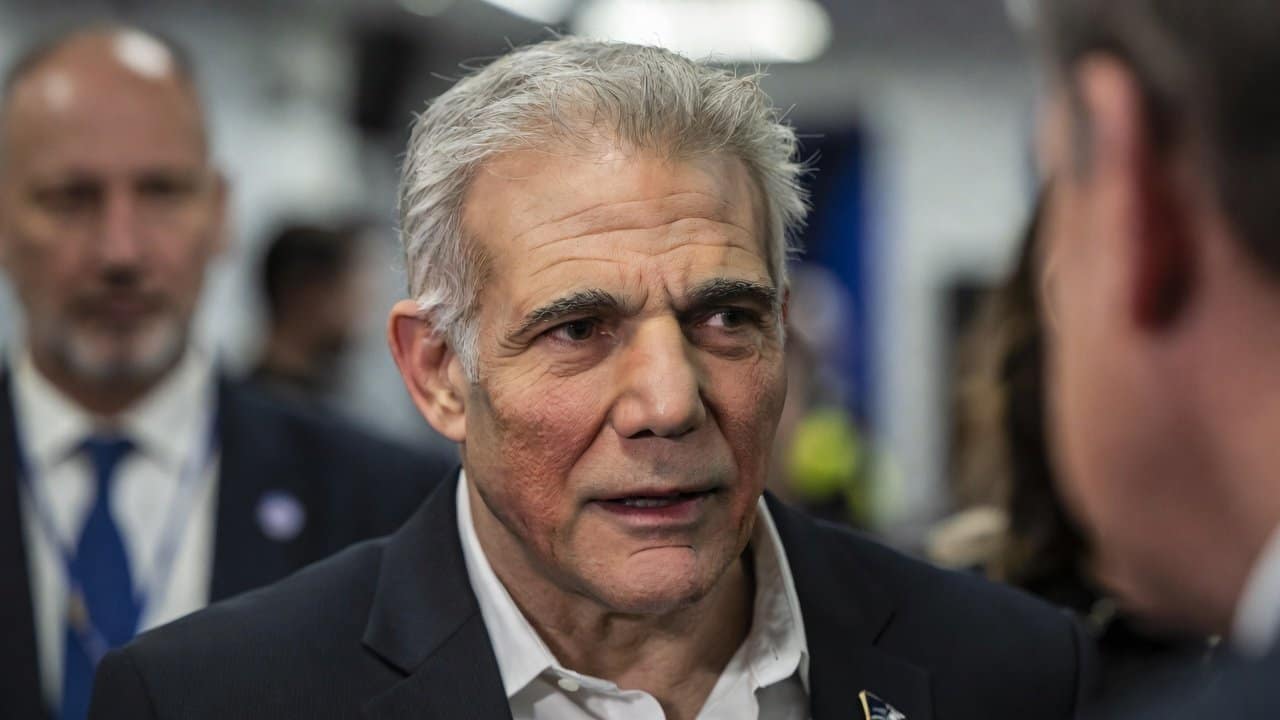
Yair Lapid is back in the center of Israel’s political fight, and this time the issue is bigger than party politics. The former Israeli prime minister and current opposition leader has sharply criticized a possible U.S.-Iran deal, saying it does not answer Israel’s main security concerns.
His comments come at a tense moment, with Israel facing another election season and Prime Minister Benjamin Netanyahu under growing pressure at home.
Lapid’s message was direct. He argued that any deal with Iran must deal not only with uranium, but also with Iran’s missile program and its support for armed groups in the region.
According to reports on his briefing, he said the emerging deal was “bad for the region” and accused Netanyahu of failing to shape the talks in a way that protects Israel’s interests.
Why Lapid’s Iran Warning Matters
The Iran issue is one of the most sensitive topics in Israeli politics. For years, Israeli leaders from different parties have warned that Iran’s nuclear work, missiles, and links to armed groups pose a serious threat. Lapid is now using that same issue to challenge Netanyahu’s image as a strong security leader.
His criticism is not only about Iran. It is also about influence. Lapid says Netanyahu allowed Washington to move ahead with little Israeli input.
That point matters because Netanyahu has long presented himself as the leader best able to manage Israel’s ties with the United States. Lapid is now trying to turn that claim against him.
A Political Fight With an Election Ahead
Lapid’s remarks landed just days after Israel’s parliament moved toward early elections.
Reuters reported that the Knesset voted on May 20, 2026, to dissolve itself, with elections expected before the legal deadline of October 27, 2026.
That timing gives Lapid’s comments more weight. He is not speaking only as a former prime minister. He is speaking as one of Netanyahu’s main rivals in a fast-moving election fight.
Lapid has also joined forces with former Prime Minister Naftali Bennett under the “Together” banner, according to recent reports. The move is meant to build a stronger centrist challenge to Netanyahu and present voters with a more united opposition camp.
Who Is Yair Lapid?
Yair Lapid is a member of the Knesset from Yesh Atid, the party he founded. The Knesset’s official member list identifies him with Yesh Atid, and Israel’s government records list him as a former prime minister with a 2022 tenure.
Before politics, Lapid was widely known in Israel as a journalist and television presenter. His move into politics came with a focus on middle-class concerns, public service, and a more centrist style of leadership. Over time, he became one of the most visible figures against Netanyahu’s long rule.
The Bigger Message Behind His Attack
Lapid’s latest comments are about more than one possible deal. He is making a wider argument that Netanyahu has not delivered the security results he promised. He pointed to Iran and Hezbollah and said Israel must keep its freedom to act, no matter what the United States decides.
That line is important because it lets Lapid sound firm on security while still attacking Netanyahu’s leadership. He is trying to show that opposition to Netanyahu does not mean weakness on national defense.
Conclusion
Lapid now has two fights in front of him. The first is the policy fight over Iran, where he wants to show that the reported deal leaves major risks untouched. The second is the election fight, where he must convince voters that he and his allies can offer steady leadership after years of political strain.
For Netanyahu, Lapid’s attack creates a difficult challenge. If the U.S.-Iran deal moves forward, he will face questions over how much influence Israel had in the process.
If the deal stalls, Lapid can still argue that Netanyahu’s handling of the issue left Israel in a weaker position.
For Lapid, the moment is a chance to define himself again. He is not only reacting to headlines. He is trying to turn a major security debate into a test of leadership, judgment, and trust.