
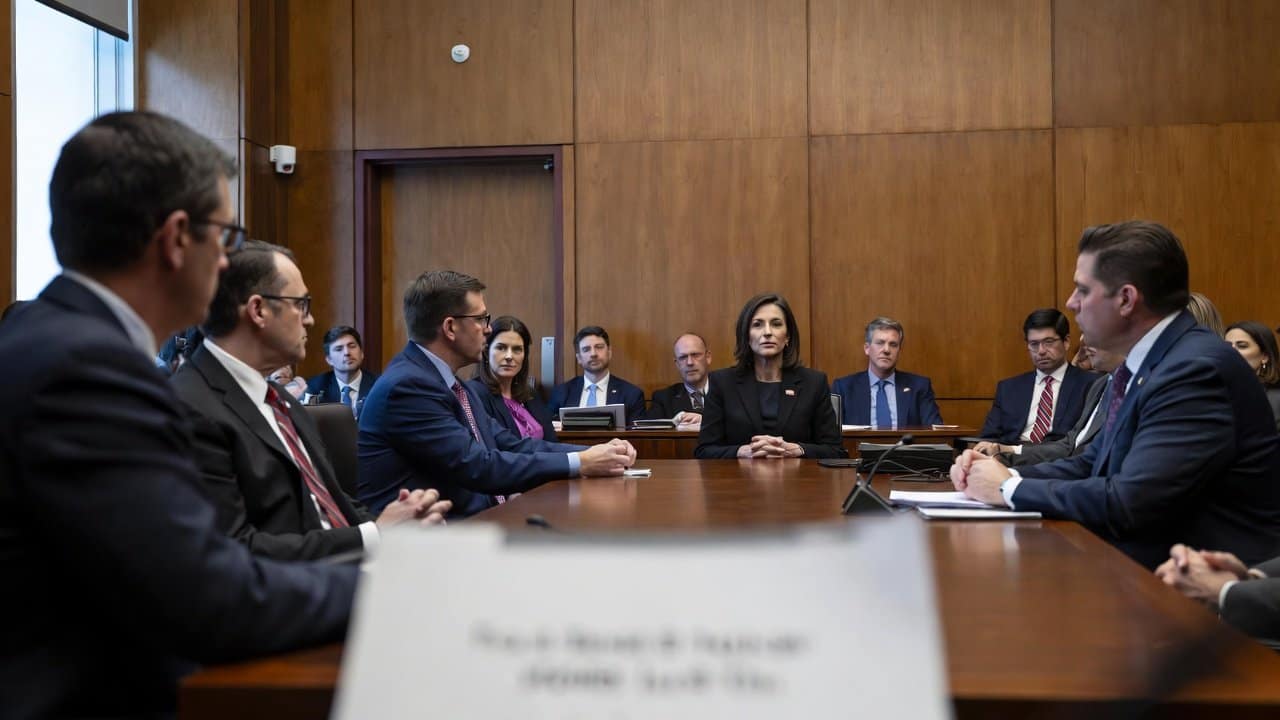
The fight over Pam Bondi’s planned deposition just took a serious turn. Former Attorney General Pam Bondi is now not expected to appear on April 14 for a closed-door deposition before the House Oversight Committee over the Justice Department’s handling of the Jeffrey Epstein files.
The key issue is not whether lawmakers still want answers. It is whether the subpoena still applies now that Bondi no longer holds the office she held when it was issued. The result is a new clash between the Justice Department and Congress, with both sides taking very different positions on what happens next.
Why Bondi Was Called In
This deposition did not come out of nowhere. On March 17, House Oversight Chairman James Comer announced that Bondi had been subpoenaed after the committee approved a motion to require her testimony.
The committee said it was reviewing the federal government’s handling of the Epstein investigation and the department’s compliance with the Epstein Files Transparency Act. In the subpoena cover letter, the committee said Bondi had direct responsibility for overseeing the department’s collection, review, and release decisions tied to those files, which is why lawmakers wanted her under oath.
Why DOJ Says She Will Not Appear
The Justice Department now says that the subpoena no longer binds her. According to Reuters and ABC News, Assistant Attorney General Patrick D. Davis told Chairman Comer that the subpoena was issued to Bondi in her official capacity as Attorney General, not in her personal capacity.
Because Bondi was removed from office last week, the department’s position is that she can no longer testify in that role and, therefore, is no longer required to appear on April 14. Davis also asked the committee to confirm that the subpoena should be withdrawn.
Why This Fight Is Far From Finished
That does not mean the matter is over. ABC News and CBS News reported that the committee has not withdrawn the subpoena and plans to contact Bondi’s personal counsel to discuss next steps. The push for testimony is still active, and it is not coming from only one side.
CBS reported that the March vote to subpoena Bondi had support from all Democrats and five Republicans. Rep. Robert Garcia, the top Democrat on the committee, said the subpoena remains binding even after Bondi’s firing and warned that contempt proceedings could follow if she refuses to testify.
What Congress Still Wants to Know
At the center of this fight is the same issue that has driven months of pressure on the department. Reuters reported that lawmakers have complained that the released Epstein files were too heavily redacted and that some documents publicly exposed victims’ names.
The committee’s subpoena letter also makes clear that lawmakers want answers not only about document release decisions, but also about the broader handling of the Epstein and Ghislaine Maxwell matters and whether Congress needs new laws to improve how the federal government handles sex crime investigations and related plea deals.
What Comes Next After DOJ’s Move
Right now, the clearest official update is this: Bondi is not expected to sit for the April 14 deposition as originally planned, because DOJ says the subpoena no longer obligates her to appear. But Congress has not backed off.
House investigators are still signaling that they want her testimony, and the next move appears to be a fresh effort to work through her personal counsel. So while the scheduled date may be in doubt, the pressure on Bondi is not.