
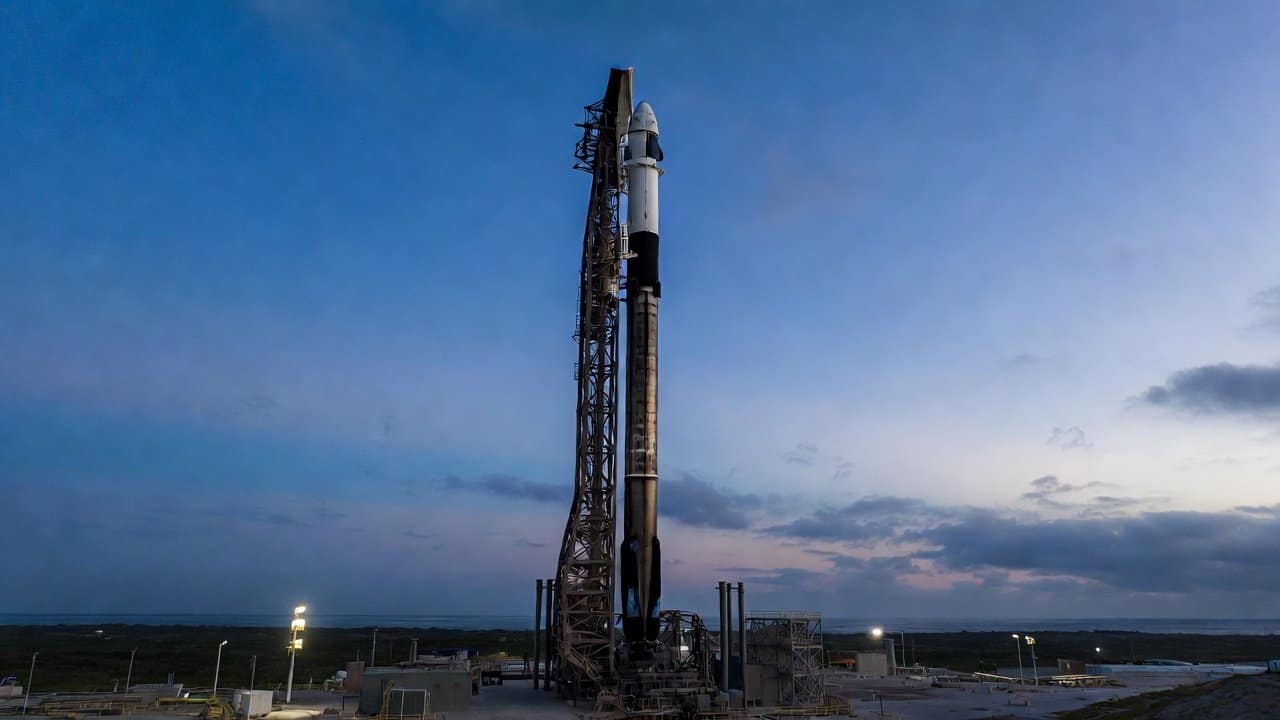
The launch pad at Vandenberg has another busy morning ahead, and this mission is easy to follow. SpaceX is not sending astronauts on this flight. It is not a Starship test.
The official plan is a Falcon 9 launch carrying 24 Starlink satellites into low-Earth orbit from Space Launch Complex 4 East at Vandenberg Space Force Base in California. SpaceX lists the launch window for Saturday, May 23, 2026, from 7:00 a.m. to 11:00 a.m. PT.
A Four-Hour Window, One Clear Target
SpaceX has set a four-hour launch window for this Starlink mission. That means liftoff is being aimed for somewhere between 7:00 a.m. and 11:00 a.m. PT, which is 10:00 a.m. to 2:00 p.m. ET, 9:00 a.m. to 1:00 p.m. CT, and 8:00 a.m. to 12:00 p.m. MT.
A launch window matters because a rocket does not leave like a train on a fixed track. Teams still need the rocket, weather, range, and final checks to line up. If one item needs extra time, the team may still have room to launch later inside the same window. If conditions do not line up, SpaceX can stand down and try another day.
24 Starlink Satellites Are Riding Falcon 9
The payload is the heart of this mission. SpaceX says Falcon 9 is targeting the launch of 24 Starlink satellites to low-Earth orbit. That detail keeps the mission clear: this is a Starlink flight, built around placing more satellites in orbit.
Low-Earth orbit is much closer to Earth than high satellite paths used by some older space systems. For this mission, the official target is not the Moon, Mars, or the space station. It is a direct Falcon 9 flight with Starlink satellites as the payload.
Why Vandenberg Is in Focus
This launch is scheduled from Space Launch Complex 4 East at Vandenberg Space Force Base in California. That matters because it tells watchers exactly which SpaceX launch site is active for this mission. Florida gets many SpaceX headlines, but today’s official Starlink listing points to California.
Vandenberg launches also give SpaceX fans a different camera view than Cape Canaveral flights. The setting may look different, but the goal is still the same: send Falcon 9 off the pad and carry the payload toward orbit.
Falcon 9 Is the Workhorse Here
Falcon 9 is the rocket assigned to this Starlink flight. SpaceX describes Falcon 9 as a reusable, two-stage rocket built to carry people and payloads into Earth orbit and beyond. That reusable design is one reason Falcon 9 remains closely tied to SpaceX’s steady launch schedule.
SpaceX’s launch listing also marks this mission with a droneship landing. That means the booster is expected to aim for a landing platform at sea after stage separation, rather than return to land.
Conclusion
The cleanest way to follow the launch is through SpaceX’s own mission page, which includes a watch option for this Starlink mission. Launch details can change, and social posts can move faster than confirmed updates. The best habit is to check the official SpaceX launch page before liftoff.
Today’s headline is clear: Falcon 9 is targeting another Starlink launch from California, with 24 satellites on board and a four-hour morning window. It is a practical mission, but that is exactly why it matters. SpaceX’s launch pace is built on flights like this, one Falcon 9 mission at a time.