
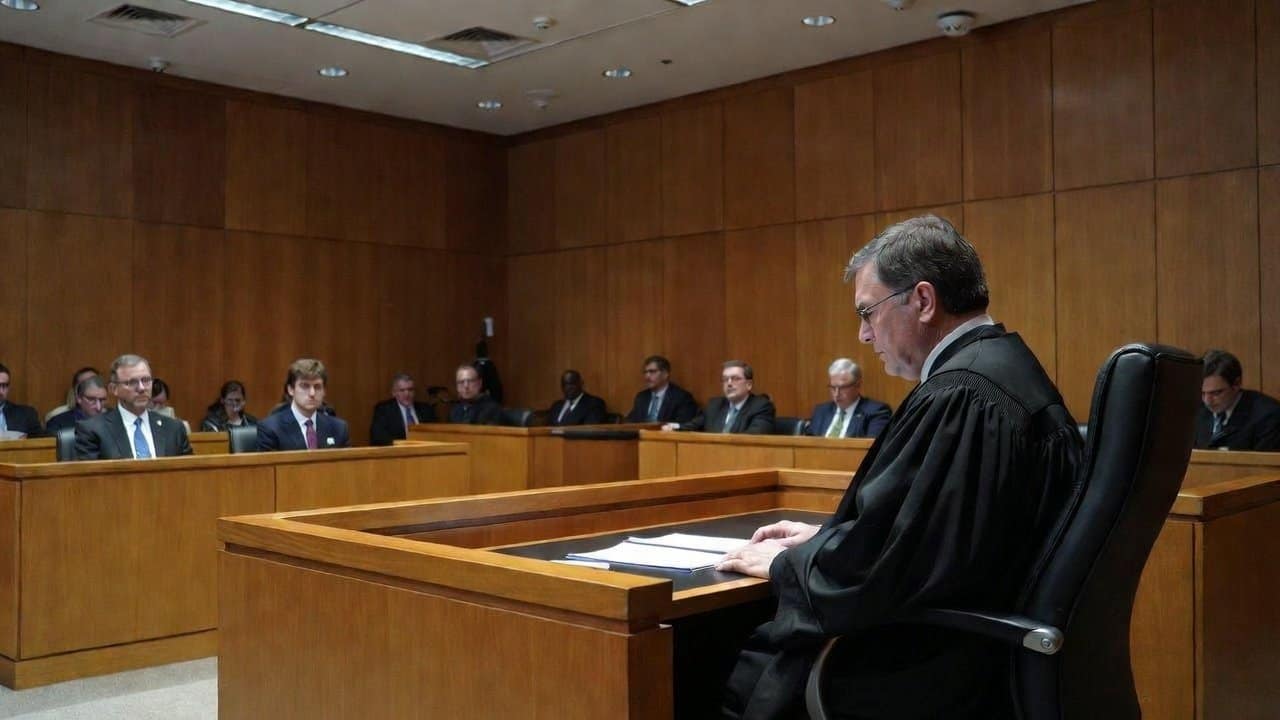
Maine’s voter data fight reached a clear turning point when Chief U.S. District Judge Lance E. Walker dismissed the Department of Justice lawsuit seeking Maine’s full voter registration list.
The case centered on whether the federal government could force Maine to hand over its complete and unredacted computerized voter registration list, including private details tied to registered voters.
The ruling matters because it was not only about a file sitting in a state database. It was about who controls election records, how much personal voter information the federal government can demand, and where state authority ends when federal officials ask for sensitive data.
What The DOJ Wanted From Maine
According to the court order, the DOJ asked for Maine’s current computerized statewide voter registration list with all fields included. That list contains voter names, addresses, dates of birth, party choice, voting history, and, depending on the voter’s registration record, a driver’s license number, nondriver ID number, or partial Social Security number.
The DOJ said it wanted the records to check Maine’s voter list maintenance under federal election laws. The agency pointed to the National Voter Registration Act, the Help America Vote Act, and Title III of the Civil Rights Act of 1960.
In a February DOJ release about similar voter roll lawsuits, the department said it was seeking full voter registration lists to review election records and voter roll maintenance.
Maine refused to provide the unredacted list. Secretary of State Shenna Bellows had first declined the DOJ request in August 2025, and the DOJ filed suit in September 2025, according to the Maine Secretary of State’s office.
Why The Judge Dismissed The Case
Judge Walker granted the motions to dismiss and denied the DOJ’s motion for an order to show cause. In the order, he wrote that the DOJ could not force the kind of access it once received through state consent when Maine refused to provide it.
A key part of the decision focused on the limits of the laws cited by the DOJ. The court found that neither the National Voter Registration Act nor the Help America Vote Act gave the federal government the power to force Maine to produce its current computerized voter list with every field included.
The order also noted that the Help America Vote Act does not contain its own disclosure rule for this kind of demand.
The judge also pointed to the balance between state and federal power in elections. His order stated that states are the main regulators and administrators of federal elections unless Congress passes a law that changes that framework.
Why Voter Privacy Became The Main Concern
The case drew attention because the requested data was not limited to public election information. It included private details that people do not expect to be shared in bulk.
Maine law treats the central voter registration system as confidential and limits how voter information can be released. The court order noted that Maine argued the request reached sensitive personal information, including full birth dates, Social Security data, and driver’s license numbers.
That privacy concern shaped much of the public reaction. Bellows said the ruling affirmed that states, not the federal government, are in charge of elections. She also said she would continue to defend voting rights and voter privacy.
Part Of A Larger National Fight
Maine’s case was not alone. The court order said the United States had filed 30 similar lawsuits after many states refused similar requests. At the time of the Maine ruling, courts had already dismissed similar cases in Arizona, Rhode Island, Massachusetts, Michigan, Oregon, and California.
Maine’s Secretary of State later said the decision was the seventh win for the group of states fighting the DOJ requests, with a similar dismissal in Wisconsin the same day.
Conclusion
The dismissal does not end the broader national debate over voter data, election oversight, and privacy. It does, however, mark a major win for Maine in this case. For now, the state does not have to turn over its full unredacted voter registration list to the DOJ under this lawsuit.
The larger message from the ruling is direct: federal election laws allow oversight, but the court found they do not give the DOJ unlimited access to a state’s complete voter database. That line is now at the center of a growing legal fight across several states.