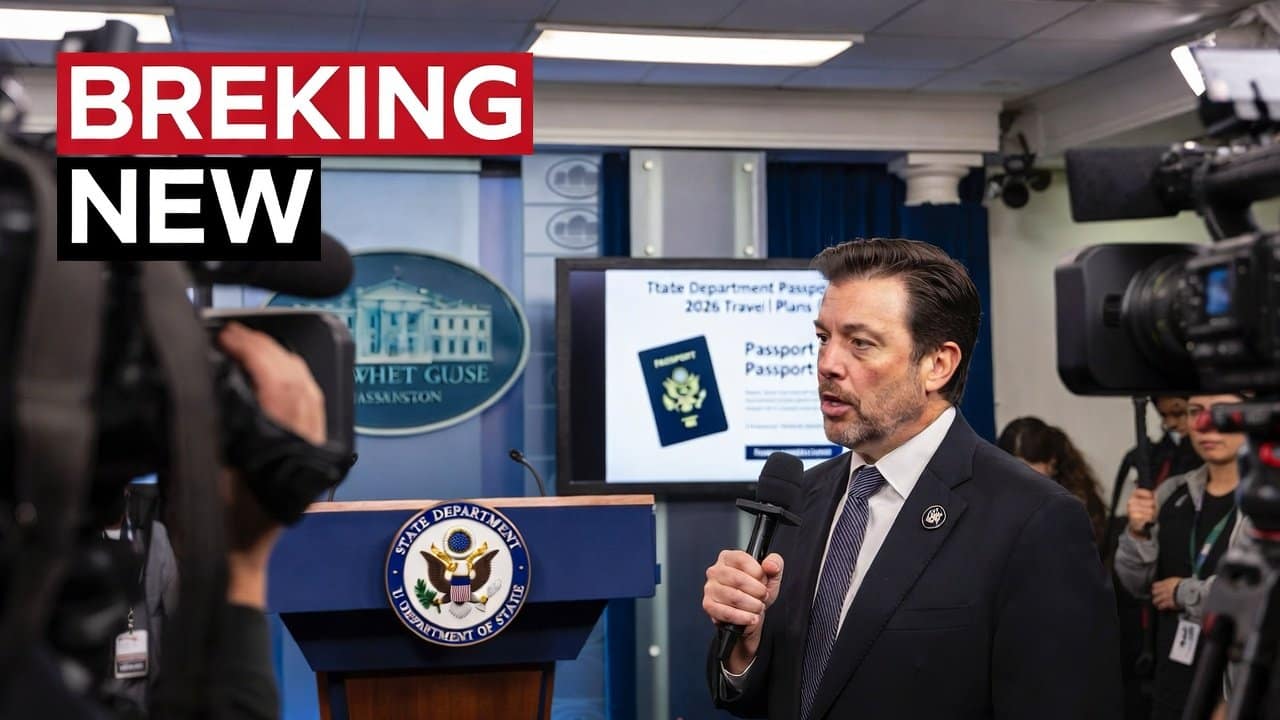
If you see “State Department passport” trending, you are not alone. A recent policy shift is changing, where many Americans can submit passport applications, while demand for passports stays high.
Here is what is actually happening, based only on official statements, and what it means for your next trip.
What the State Department has changed for passport applications
The big story is about passport services at nonprofit public libraries.
According to reporting based on State Department briefings and documents, the Department has ordered certain nonprofit public libraries across the United States to stop processing passport applications as part of the federal Passport Acceptance Facility program.
Cease and desist letters went out to these nonprofit libraries, telling them they are no longer authorized to accept applications for the Department.
Officials say the reason is federal law and regulations that, in their view, clearly do not allow nongovernmental organizations to collect and handle passport application fees.
Key details from those official explanations and data:
- Nonprofit public libraries began phasing out passport services after the order, with February 13, 2026, marked as the key date when the change took effect nationwide.
- Government-run libraries are not affected and can continue as passport acceptance facilities.
- The State Department says nonprofit libraries that lose this role make up less than one percent of all locations in the Passport Acceptance Facility program, which includes more than 7,500 sites around the country.
The American Library Association has shared that roughly 1,400 public libraries in the United States are organized as nonprofits. Depending on which of them offer passport services, many of those could be affected by this policy. That is about 15 percent of all public libraries open to the public.
How does this change affect you when you apply for a passport
For many families, especially in suburbs and rural areas, the local library has been the easiest place to submit a passport application. Libraries often offer evening and weekend hours and staff who know the paperwork well.
With this new enforcement:
- Nonprofit libraries that were acceptance facilities are losing that role.
- You may need to shift to a nearby post office, county clerk, courthouse, or a government-run library that still serves as a passport acceptance facility.
The State Department’s position is that access overall remains strong. It notes that:
- There are more than 7,500 passport acceptance facilities nationwide.
- Over 99 percent of people in the United States live within about 20 miles of an approved location, such as a post office, county office, or government-run library.
At the same time, demand has been intense. More than 23.3 million passport applications were submitted in fiscal year 2025, which puts real pressure on appointment slots.
Members of Congress from several states have already introduced bipartisan bills that would change the Passport Act of 1920 so that certain nonprofit libraries can continue to accept applications.
For now, though, the safest assumption is simple. If you used to rely on a nonprofit library for your passport, you need to double-check whether they still offer that service before you go.
Current State Department passport processing times
Alongside the location changes, processing times themselves are set out in clear terms on the State Department’s official site.
As of late January 2026, the Department lists these standard processing times for U.S. passports:
- Routine processing: 4 to 6 weeks
- Expedited processing: 2 to 3 weeks, plus an extra 60 dollar fee
- Urgent cases: you must make an appointment at a passport agency, and you need to have international travel within 14 calendar days (or 28 days if you also need a foreign visa)
The Department also stresses that mailing time is not included in those processing windows. It can take about two weeks for your application to arrive at a passport agency or center and another two weeks for the finished passport to reach you.
In other words, total time from the day you send your package until the day your passport lands in your mailbox can be noticeably longer than the “4 to 6 weeks” headline.
To handle demand, the State Department is also promoting special passport acceptance fairs at post offices, clerks of court, and libraries around the country. These events focus on first-time adult applicants and all children, and they encourage people to apply early and avoid the seasonal rush.
Simple steps to protect your 2026 travel plans
Based on the official information above, here is how to stay ahead of the changes.
- Check where you can apply before you go out
Use the State Department’s official passport site to look up acceptance facilities near your home instead of assuming your usual library still offers the service.
- Count full door-to-door timing, not just processing days
Add mailing time on both ends to the routine or expedited window the Department publishes. For many people, that means planning several extra weeks before an international trip.
- Watch for passport fairs in your area
The State Department’s own news page highlights special acceptance fairs that can be useful if you are applying for the first time or getting passports for children.
- Apply as early as you reasonably can
Official guidance notes that demand rises from late winter through summer, so applying in advance helps you avoid peak season stress.
The State Department passport program is still running at thousands of locations, but nonprofit libraries that once made the process easier for many communities are being phased out of the system.
If you line up the right location and give yourself enough time based on the Department’s own numbers, you can still keep your 2026 travel plans on track without last-minute passport panic.