
If you have seen the solar eclipse 2026 trending today and wondered what the fuss is about, you are not alone.
This year brings two major solar events, and even though the United States is not in the direct line of total darkness, there is still a lot worth knowing and planning for.
Two big solar events in 2026
According to NASA, there are two solar eclipses in 2026. The first is an annular solar eclipse on February 17. The second is a total solar eclipse on August 12.
An annular eclipse happens when the Moon is a little farther from Earth and looks slightly smaller than the Sun. Instead of covering the Sun completely, it leaves a bright ring of light around the dark Moon, often called a ring of fire.
For the February 17 event, that ring of fire appears only over remote parts of Antarctica. People in parts of southern Africa and the very southern tip of South America get a partial eclipse, where the Moon only takes a bite out of the Sun.
Global timing for the February 17 eclipse is tightly pinned down. The partial phase begins around 09:56 UTC, reaches its maximum around 12:12 UTC, and ends near 14:27 UTC. In US Eastern Time, that lines up with roughly 4:56 a.m. to 9:27 a.m. on Tuesday morning, which is why many outlets are offering live streams during US morning hours.
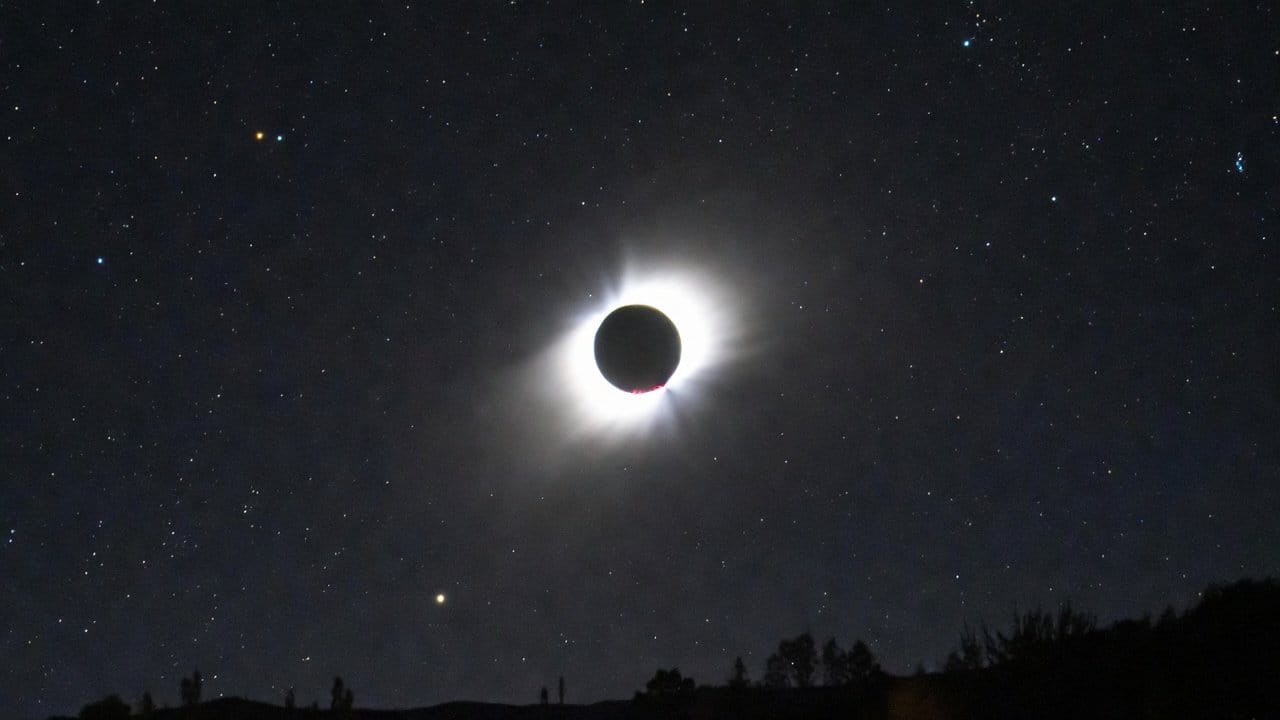
The second event is the total solar eclipse on August 12. In a total eclipse, the Moon appears large enough to block the entire face of the Sun, turning daytime briefly into a kind of deep twilight. The main path of totality on August 12 sweeps across the Arctic Ocean, Greenland, Iceland, the Atlantic, and into northern Spain and a small part of Portugal.
What 2026 looks like from the United States
Here is the key part for US readers.
The February 17 annular eclipse is not visible from the United States at all. It is centered over Antarctica, with only partial views from the far south of South America and parts of Africa and nearby oceans. Time and Date and NASA both list no US locations within the visibility zone for this event.
The August 12 total eclipse is more relevant. While totality does not cross any part of the continental United States, a partial eclipse will be visible from parts of North America. NASA notes that the partial shadow will cover Europe, Africa, and North America, and the Old Farmer’s Almanac points out that it is visible as a partial eclipse from Canada and some northern US states near the Canadian border.
What does that mean for someone in the United States
- If you live in the northern tier of the country, especially close to Canada, you are likely to see the Moon take a noticeable bite out of the Sun on August 12, weather permitting.
- The exact size of that bite and the local time of maximum eclipse will depend on your city. Tools like timeanddate.com let you enter your location and see precise times based on official calculations.
- No part of the United States will experience full totality in 2026, so the dramatic full day-to-night effect happens only if you travel into the main path in Greenland, Iceland, or Spain.
How to watch safely and plan a trip if you want more
Even for a small partial eclipse, eye safety is not optional. Both NASA and major science outlets repeat the same rule. You never look directly at the Sun without proper solar filters. That means certified eclipse glasses, a handheld solar viewer, or a telescope and camera fitted with a special solar filter on the front. Regular sunglasses are not safe, even very dark ones.
If clouds or geography keep you out of the action, you can still follow both 2026 events through live streams from trusted astronomy organizations. These streams use filtered telescopes and commentary, so you get a clear view with zero risk to your eyes.
For anyone who wants to turn the August 12 eclipse into a once-in-a-lifetime trip, planning early really matters. Northern Spain is already being promoted as one of the prime spots, with cities like Valencia, Bilbao, and A Coruna in or near the path of totality. Travel outlets are reporting sharp rises in flight searches and early hotel bookings in Spanish destinations along the path.
If you are in the United States and thinking about it, this is the basic strategy
- Decide whether you are happy with a partial view from home or want full totality.
- For totality, look at trips to Iceland or northern Spain, where infrastructure and weather odds are both good according to current travel reports.
- Wherever you plan to watch, line up certified eclipse glasses well in advance, and keep a simple backup plan, such as a local livestream in case of bad weather.
Even though 2026 does not bring a direct total eclipse to the continental United States, it is still a year worth circling on your calendar. With smart planning, you can enjoy a safe partial view from home or turn the total eclipse into an excuse for a carefully planned adventure abroad.