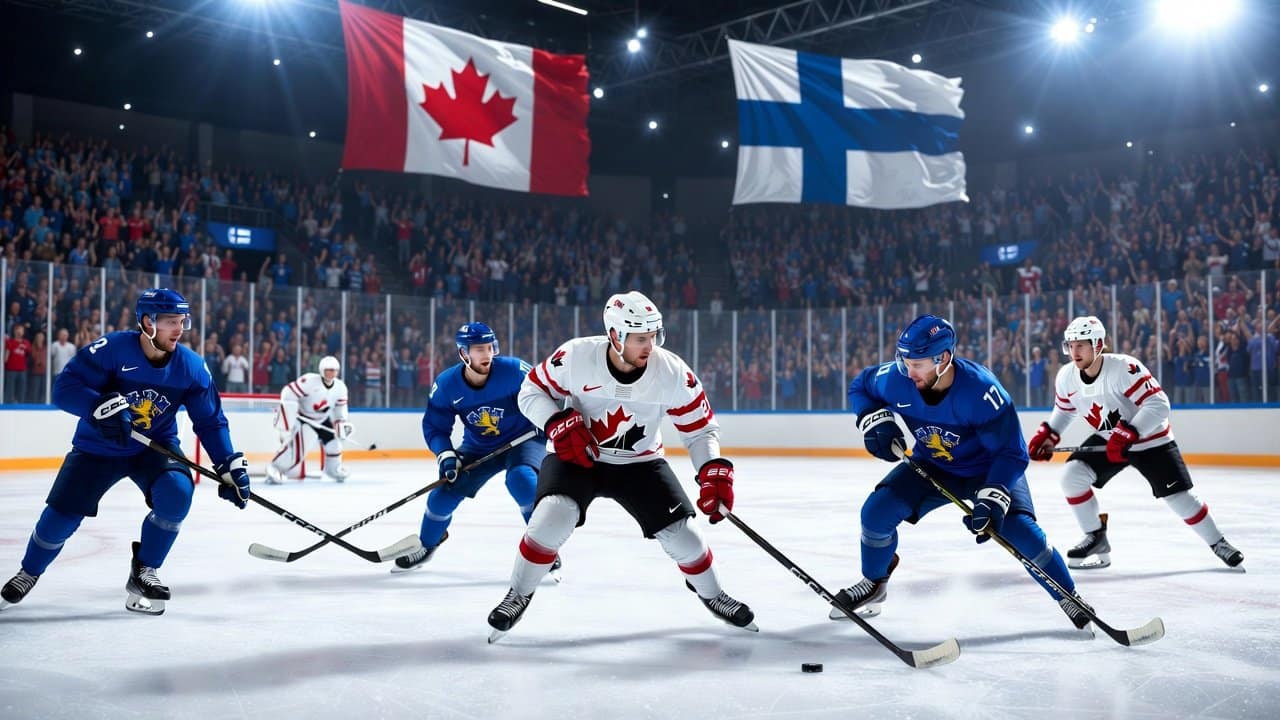
The men’s Olympic hockey tournament has reached the point where every mistake can decide a medal. On Friday in Milan, Canada meets Finland in a semifinal at the Milano Santagiulia Ice Hockey Arena, with the winner moving on to play for gold at the Milano Cortina 2026 Winter Games.
For fans in the United States, this matchup is more than a neutral game. A win for Canada could set up a Sunday final against the US if the American team gets past Slovakia in the other semifinal, so this one shapes the path to a potential North American showdown.
Game time and how to watch Canada vs Finland in the US
Here are the essentials for viewers across the United States, based on official broadcast listings:
- Date: Friday, February 20, 2026
- Puck drop: 10:40 a.m. Eastern Time
- Arena: Milano Santagiulia Ice Hockey Arena, Milan, Italy
- Live streaming in the US: Peacock
- TV coverage in the US: USA Network joins the game after the start, with delayed coverage beginning at 11:50 a.m. Eastern Time
The game streams live from the opening faceoff on Peacock. NBC’s choice to start the contest on streaming only and to join later on USA Network has already led to a wave of criticism from hockey fans who expected full live coverage on cable.
Some providers also promote trial offers that include USA Network access, such as a five-day DIRECTV streaming trial mentioned in US media guides, which gives another route for viewers who want to sample the coverage without a long-term commitment.
Why This Match Is So Important For The Tournament
Finland comes into this game as the defending Olympic champion in men’s ice hockey after winning its first-ever gold in Beijing 2022. That history adds weight to every shift. The current group has shown the same calm, organized style, built on structure and patience in all three zones.
Canada is chasing a return to the top of the Olympic podium with a full roster of NHL players. The 2026 tournament is the first Winter Games since 2014 where NHL stars are fully involved again, following the league’s agreement with the players’ association to participate in Milan.
Both teams had to work hard just to reach this stage. In the quarterfinals, Canada needed overtime to edge Czechia 4 to 3, while Finland also required extra time to defeat Switzerland 3 to 2. Those results underline how tight the field is at this tournament.
The bracket sets the stakes clearly. The winner of Canada vs Finland advances to the gold medal game on Sunday, February 22, at 8:10 a.m. Eastern Time. The loser will play the bronze medal game on Saturday, February 21, at 2:40 p.m. Eastern Time.
Who Matters Most On The Ice Tonight
Canada’s roster is packed with names American fans know well from the NHL. The official Olympic roster includes forwards such as Connor McDavid, Nathan MacKinnon, Macklin Celebrini, Sidney Crosby, Sam Reinhart, Mitch Marner, Nick Suzuki, Tom Wilson, and others, along with a deep defense group and experienced goaltenders like Jordan Binnington and Darcy Kuemper.
One major question around this game has been Crosby’s health. He suffered a lower-body injury in the quarterfinal win over Czechia, and an update from the Olympic organizers noted that he has been ruled out for the semifinal after failing to recover in time. That absence shifts leadership duties to other veterans and might push younger stars such as Celebrini into an even larger role.
Finland arrives with a different profile. While Canada leans on several of the highest-scoring players in the NHL, Finland is known for a collective approach and disciplined systems. The national program has built a reputation over the past decade for producing teams that stay patient, defend well, and take advantage of small openings. That model helped them win Olympic gold in 2022 and beat Canada in the World Championship final later the same year.
How Canada’s Firepower Compares With Finland’s Structure
On paper, Canada has the deeper attack. A recent betting and analytics preview noted that Canada entered the semifinal with a 4- 0 record at this tournament, scoring 24 goals and allowing only six. The power play has been one of the most dangerous units in the field, and the team has already shown it can come from behind in high-pressure games.
Finland, by contrast, usually plays lower-scoring, structured games. They rely heavily on goaltending and tight defensive coverage, a style that often suits tournament hockey, where one mistake can swing a knockout game. Their overtime win against Switzerland fit that pattern, with patient play and timely scoring rather than constant offensive pressure.
For US fans, the contrast makes this semifinal worth attention even beyond the bracket implications. If Canada’s skill and speed break through early, the game could tilt in their favor quickly. If Finland slows things down and turns it into a tight, tactical contest, they have the experience to frustrate even a star-filled Canadian lineup.
Either way, the winner will step into Sunday’s gold medal game with serious momentum, and the rest of the hockey world, including fans across the United States, will be watching closely to see who earns that chance.