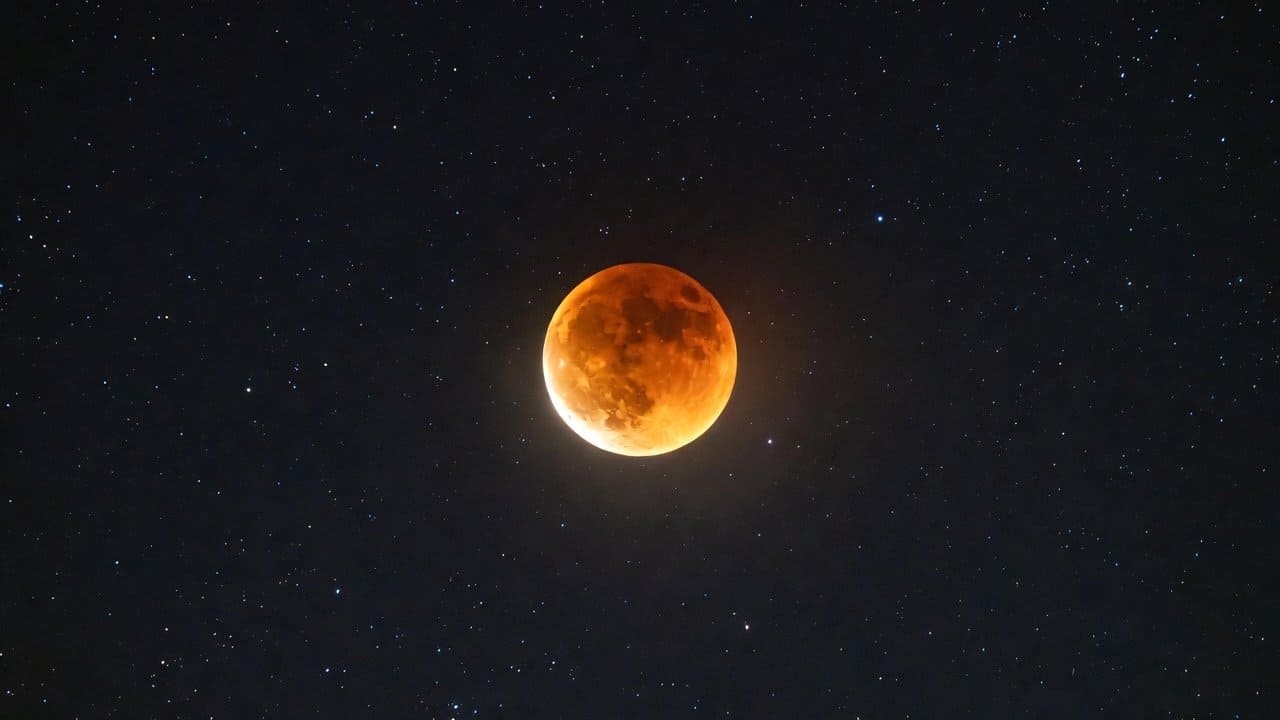
If “total lunar eclipse” is all over your feed right now, it is for a good reason. In the predawn hours of Tuesday, March 3, 2026, the full Moon will slide into Earth’s shadow. For about an hour, the Moon can take on a coppery red look, which is why many people call it a “blood Moon.”
A lunar eclipse only happens during a full Moon, when Earth passes between the Sun and the Moon and casts a shadow across the lunar surface.
What Makes a Lunar Eclipse Turn the Moon Copper
During totality, the Moon is inside Earth’s darkest shadow, but it does not disappear. NASA says the Moon can look red or orange because the light that reaches it has been filtered through a thick slice of Earth’s atmosphere, like the warm colors you see at sunrise and sunset.
The Exact Eclipse Schedule for the USA
Here are the official milestone times NASA lists for Pacific and Eastern. If you only set one alarm, aim for totality when the whole Moon is in the umbra.
Pacific (PST)
- Penumbral begins at 12:44 a.m.
- Partial begins at 1:50 a.m.
- Totality 3:04 a.m. to 4:03 a.m.
- Partial ends 5:17 a.m.
- Penumbral ends 6:23 a.m.
Eastern (EST)
- Penumbral begins at 3:44 a.m.
- Partial begins at 4:50 a.m.
- Totality 6:04 a.m. to 7:03 a.m.
- Partial ends 8:17 a.m.
- Penumbral ends 9:23 a.m.
Fast conversions for the rest of the U.S.
- Central is one hour earlier than Eastern.
- Mountain is two hours earlier than Eastern.
- Alaska is one hour earlier than the Pacific.
- Hawaii is two hours earlier than the Pacific.
One important heads up: NASA notes that observers near the edge of the visibility region may only catch part of the eclipse because the Moon can rise or set while it is still happening. So if the Moon is low where you live, start watching earlier rather than later.
How the Moon’s Look Changes Through the Eclipse
Penumbral phase: The Moon enters the outer shadow first. NASA says the dimming is subtle, so it may look almost normal at the start.
Partial phase: This is when it gets obvious. As the Moon moves into the umbra, NASA says it can look like a bite is being taken out of the Moon, and the shadowed part looks very dark.
Totality: The entire Moon is inside the umbra. NASA describes the Moon as tinted a coppery red during this stretch, and the published start and end times show it lasts about an hour.
What You Need and What You Can Skip
You can watch a lunar eclipse with your eyes. NASA says you do not need special equipment and that a darker spot away from bright lights can make the view feel more dramatic.
If you want to buy or grab one thing, make it binoculars. They make the shading and color changes easier to see without any setup. A small telescope can be great too, but it is optional.
How to Get a Sharp Moon Photo During Totality
During totality, the Moon is much dimmer than a normal full Moon. NASA suggests using a camera on a tripod and exposures of at least several seconds during totality.
Important Note: NASA notes the Moon sits in the constellation Leo during the eclipse, and as the Moon darkens, nearby stars can be easier to spot than they usually are on a bright full Moon.