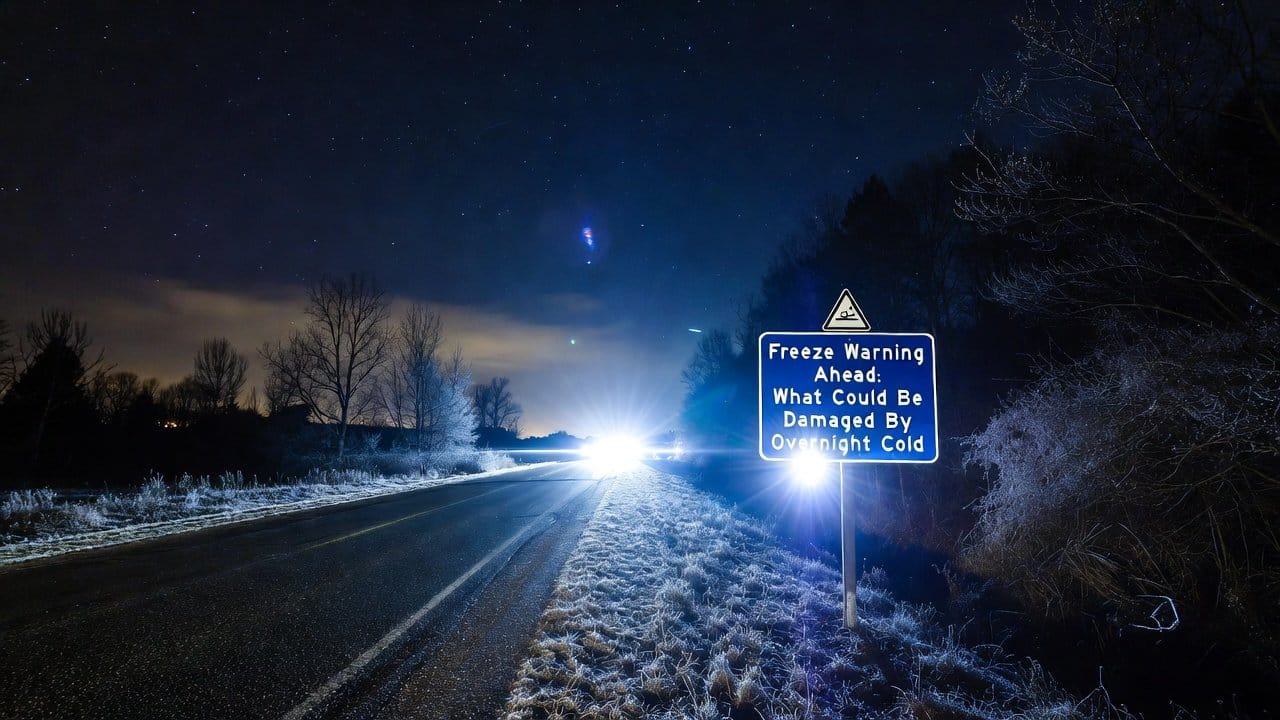
A freeze warning can sound like just another cold-weather note. It is not. When this alert goes up, it means temperatures are expected to fall below freezing across a wide area for long enough to do real damage.
That can hit early spring plants, outdoor pipes, and anything left exposed overnight. This is why people pay attention when the freeze warning starts showing up.
Why This Freeze Warning Is Not One To Ignore
Right now, this is not just one small local alert. The National Weather Service’s main alerts page lists Freeze Warning among active U.S. alerts, and local forecast offices in parts of the South are already highlighting it.
A point forecast in Arkansas shows a Freeze Warning from 1:00 AM to 10:00 AM CDT on March 16. The Jackson, Mississippi office also shows an active Freeze Warning on its alerts page. In the Mid-South, the Memphis office said a Freeze Warning is in effect for most of the region Monday morning, with even colder air expected after that.
That matters because freeze damage often comes after a warm stretch, when people have already moved on from winter. Once plants start growing again, a sudden drop below 32°F can be rough on gardens, crops, and fresh growth.
The National Weather Service says a Freeze Warning is used during the growing season when temperatures are expected to drop below freezing over a large area for an extended period, whether frost forms or not.
What This Alert Says About The Cold Ahead
The simplest way to read it is this: a Freeze Warning means it is time to act, not just watch. According to the National Weather Service, the warning is used when temperatures are forecast to go below 32°F for a long period of time.
That level of cold can kill some commercial crops and home plants. The same NWS guidance says temperatures below 28°F for an extended period can kill most commercial crops and many residential plants.
It also helps to know the difference between the nearby alerts that can sound similar. A Freeze Watch means freezing temperatures are possible, but the timing or exact area is not fully locked in yet. A Frost Advisory is a step lower.
It means frost is expected or already happening, mainly posing a risk to sensitive vegetation. A freeze warning is the more serious signal because it points to broader and longer-lasting cold.
What Could Be Hit Hardest By The Cold
The Memphis office put the message in the clearest possible way: protect people, pets, plants, and pipes. That is a useful checklist because those are the things that tend to be hit first when temperatures fall fast overnight.
Tender plants and early blooms are the most obvious risk, but unprotected pipes can also be vulnerable when freezing air lasts into the morning.
There is another reason this alert stands out today. Some forecast offices are also pointing to even colder air right behind active storms. Nashville’s office says winter makes a brief comeback after the front passes, and it expects a hard freeze Monday night with lows in the upper teens to low 20s.
The National Weather Service defines a hard freeze as 28°F or lower for an extended period. That is the kind of cold that can wipe out unprotected growth quickly.
What Matters Most Before The Freeze Sets In
A freeze warning is not background noise. It is a direct sign that freezing temperatures are expected soon enough, and long enough, to cause damage. If this alert is up in your area, the smart move is to handle the basics before nightfall, especially plants, pets, and exposed plumbing.
For the latest county-level status, the National Weather Service active alerts and local forecast pages remain the official place to check what is in effect and when it starts.