
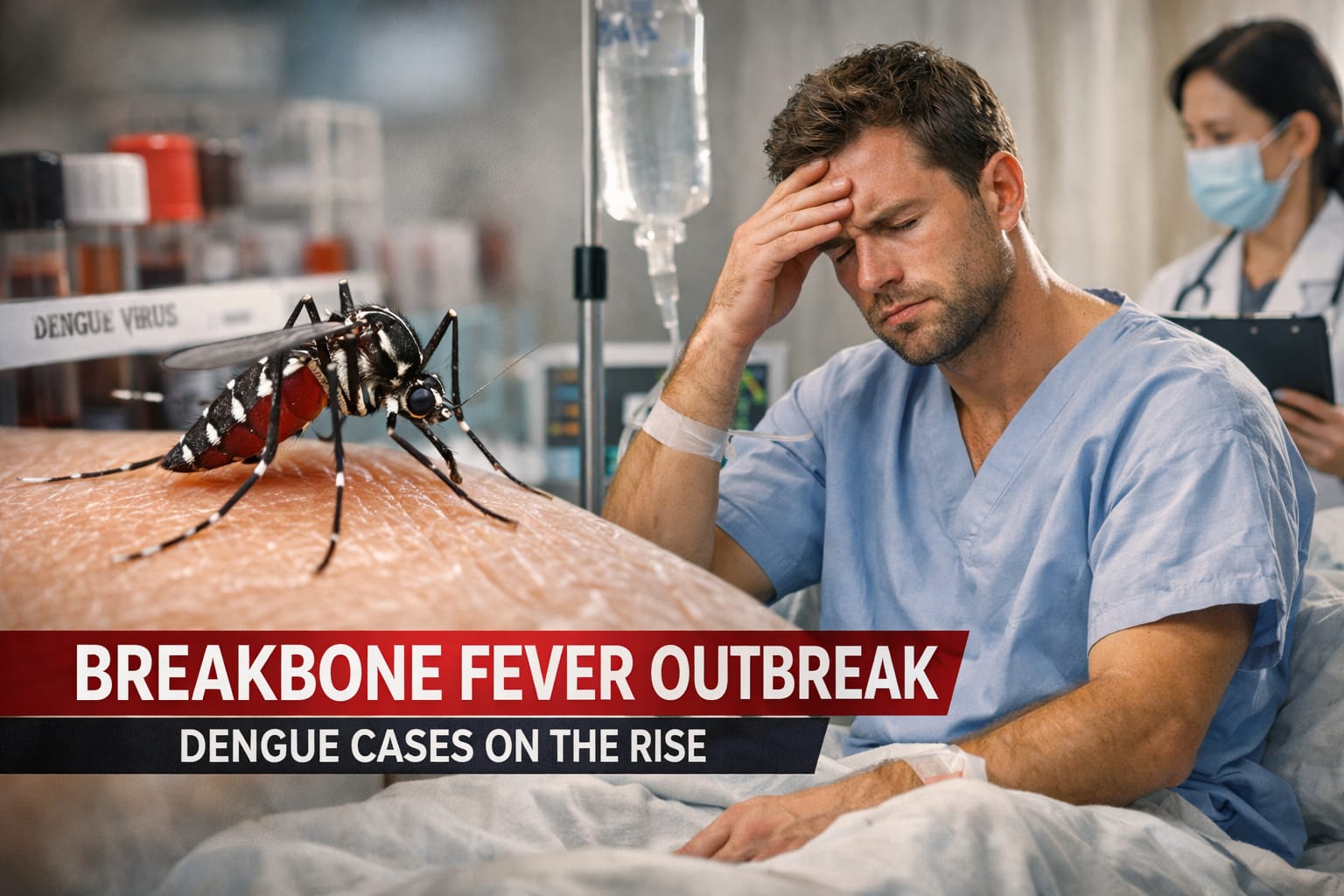
The name sounds dramatic, but breakbone fever is not some old illness from a history book. It is another name for dengue, a virus spread by mosquitoes.
It is back in focus right now because the CDC updated its Global Dengue travel notice on March 23, 2026, warning that some countries are reporting higher than usual case numbers.
The CDC also says most dengue cases in the 49 continental U.S. states happen in travelers, though local spread can happen too.
The Signs That Should Not Be Ignored
Dengue often starts suddenly. Fever is common, along with headache, nausea, vomiting, rash, and deep body pain, especially behind the eyes, in the muscles, joints, and bones. That crushing ache is one reason people call it breakbone fever.
Symptoms usually begin within two weeks after an infected mosquito bite, often sooner, and many people start feeling better within about a week. Still, the CDC says about 1 in 4 infections cause symptoms, and about 1 in 20 sick patients can go on to develop severe dengue.
What makes dengue tricky is that the most dangerous part can come after the fever starts to fade. Warning signs often show up in the next 24 to 48 hours.
The CDC says severe dengue can bring belly pain, repeated vomiting, bleeding from the nose or gums, blood in vomit or stool, and extreme tiredness or restlessness. This is not something to watch casually at home.
Severe dengue is a medical emergency and may require hospital care.
What to Do If You Think You Have It
If dengue is possible, get medical advice quickly, especially if you were recently in a place where dengue risk is present. A blood test can confirm the diagnosis, but doctors may begin care based on symptoms.
There is no specific treatment that cures dengue itself. Care is focused on rest, fluids, and careful symptom control. The CDC and MedlinePlus both advise using acetaminophen for fever and pain, while avoiding aspirin, ibuprofen, and naproxen because they can raise the risk of bleeding.
Another point matters more than many people realize. If you come home from a dengue risk area, the CDC says you should keep preventing mosquito bites for 3 weeks, even if you feel fine.
That step helps stop local mosquitoes from biting an infected person and then passing the virus to someone else. It is a small action, but it can make a real difference.
The Best Ways to Cut Your Risk
The strongest protection is still the most basic one: avoid mosquito bites. The CDC says dengue spreads mainly through infected Aedes mosquitoes, which can bite during the day and night.
Use an EPA-registered insect repellent, wear long sleeves and pants, stay in places with air conditioning or window screens, and remove standing water around the home where mosquitoes can breed.
There is no widely available dengue vaccine for the general public, so bite prevention remains the front line of defense.
Breakbone fever is easy to brush off at first because it can look like many other viral illnesses. That is exactly why it deserves respect.
Fast attention, smart home care, and a close eye on warning signs can be the difference between a rough week and a true emergency.