
The Jones Act is one of those laws that usually stays in the background until prices rise and supply lines tighten. That is exactly what is happening now.
On March 12, 2026, the White House said it was considering a limited waiver of the law so vital energy products and agricultural goods could move more freely between U.S. ports. That step had not been finalized at the time of the statement, but it quickly pushed the law back into the spotlight.
The Main Scope of the Jones Act
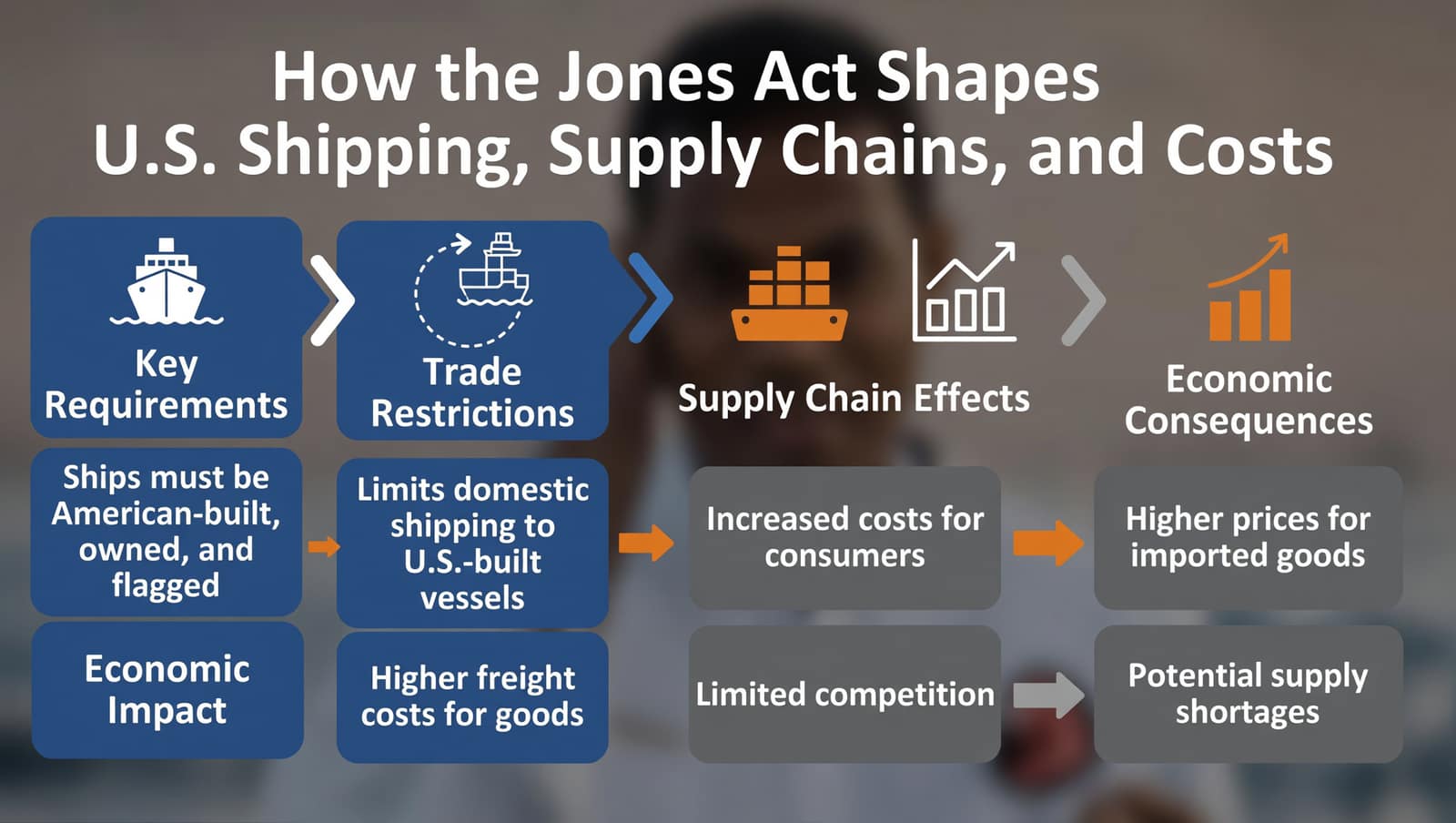
The Jones Act is part of the Merchant Marine Act of 1920. In simple terms, it covers goods moved by water between U.S. points. MARAD says that cargo must travel on vessels that are U.S.-built, U.S.-citizen-owned, and registered in the United States, which means they are crewed by Americans.
So this is not a rule for every ship coming into the country from abroad. It is a rule for domestic water shipping inside the United States.
Why This Law Still Carries So Much Weight
This law matters because Washington does not treat it as just a shipping rule. MARAD says the Jones Act helps support a strong U.S. Merchant Marine for economic security and national defense.
A 2025 GAO report makes the same basic point from another angle, saying coastwise laws support the U.S. maritime industry and that construction in U.S. shipyards plays a vital role in national defense.
That is why debates over the Jones Act are never only about boats. They are also about jobs, shipbuilding, and whether the country keeps enough domestic shipping strength when it really needs it.
Why It Comes Up When Costs Start Climbing
The pressure starts when supply gets tight. GAO says U.S.-built vessels generally cost more than foreign-built ones. Reuters also reported on March 12 that the Jones Act sharply limits the number of tankers available for domestic shipments.
That helps explain why the law gets pulled into public debate whenever fuel, fertilizer, or other basic goods face disruption. Once shipping options narrow, every rule connected to movement, timing, and cost comes under fresh scrutiny.
Can the Government Waive It
Yes, but the bar is high. MARAD says Jones Act exemptions are rare and that the only basis for a waiver is the interest of national defense. MARAD also says the final issuer of any waiver is the Secretary of Homeland Security, not MARAD.
Past federal actions show how limited this power is. DHS issued temporary waivers in 2017 after major hurricane disruptions, and in September 2022, DHS approved a temporary and targeted waiver for Puerto Rico after Hurricane Fiona.
What Matters Right Now
Right now, the biggest thing to understand is this: there is no finalized new waiver yet. What exists is a White House statement saying a limited waiver is under consideration to help energy and agricultural products keep moving between U.S. ports. That means the Jones Act has not been canceled, rewritten, or set aside across the board.
It is simply back at the center of a familiar question: when supply stress rises fast, should the government protect long-standing domestic shipping rules, or relax them for a short stretch to ease the pressure? That tension is exactly why this law keeps returning to the headlines.