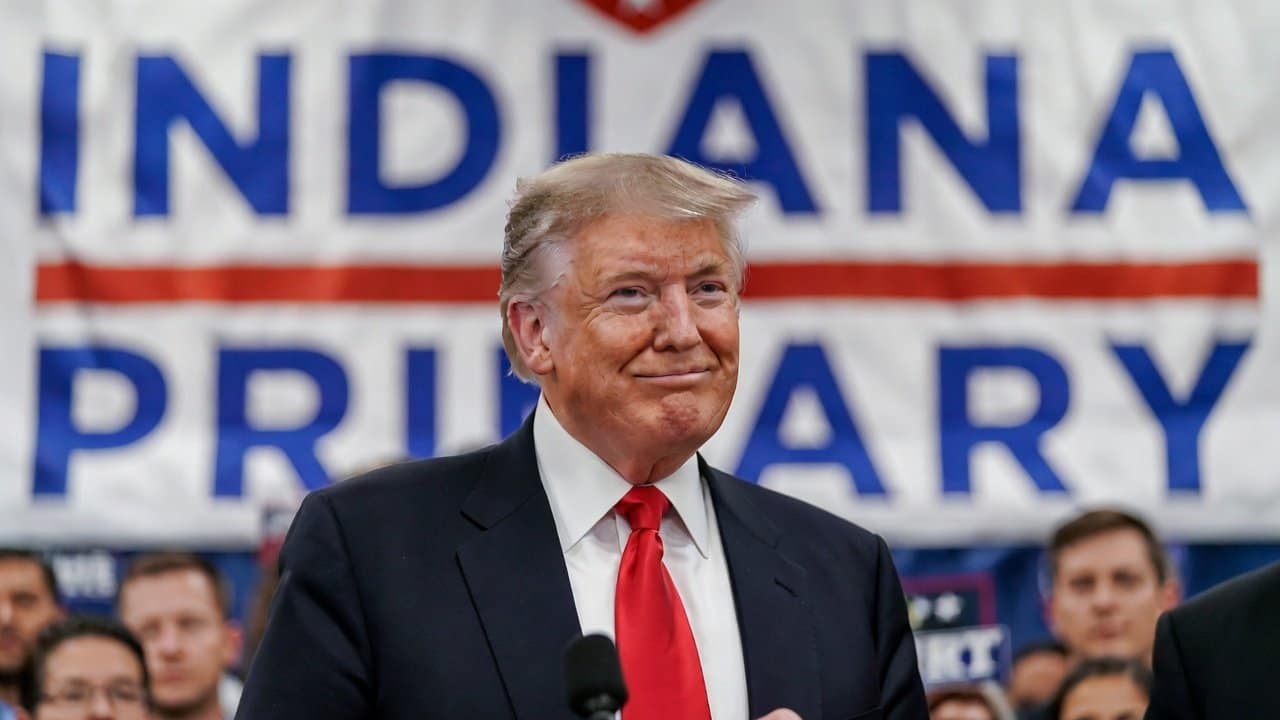
What started as a fight over lines on a map has turned into one of the sharpest Republican primary battles in Indiana this year.
President Donald Trump has endorsed several Indiana primary challengers after Republican state senators rejected his push to redraw the state’s congressional map. The Indiana primary is set for Tuesday, May 5, 2026, according to the Indiana Election Division.
This is not a normal state-level primary fight. These races usually stay local. They are often about schools, roads, taxes, farmland, property issues, and local trust. This year, some of them are carrying a much bigger question: how far does Trump’s influence reach inside the Republican Party?
Why Trump Is Targeting Indiana Republicans
The fight goes back to Indiana’s failed redistricting plan. Trump wanted Indiana Republicans to redraw congressional maps in a way that could help the GOP in U.S. House races. But the Republican-controlled state Senate voted against redistricting in December, handing Trump a political loss inside a state he has carried strongly.
After that, Trump moved into primary mode. He endorsed seven primary challengers against Republican state senators who opposed the redistricting effort. AP reported that these races have become a test of Trump’s control over the Republican Party before the May 5 primary.
The message is clear. Support Trump’s redistricting push, and you may get his backing. Oppose it, and you may face a Trump-backed challenger.
The Challengers Trump Has Backed
Trump’s endorsed challengers include names such as Paula Copenhaver, who is running against Sen. Spencer Deery, Blake Fiechter against Sen. Travis Holdman, Tracey Powell against Sen. Jim Buck, Brenda Wilson against Sen. Greg Goode, Jeff Ellington in the District 39 race, and Michelle Davis against Sen.
Greg Walker. WFYI also reported Trump’s support for several Republican lawmakers who backed redistricting, including Sens. Tyler Johnson, Liz Brown, Ron Alting, Mike Gaskill, Scott Alexander, Jeff Raatz, Randy Maxwell, Chris Garten, Gary Byrne, Daryl Schmidt, and Jim Tomes.
More endorsements followed in April. The Indiana Capital Chronicle reported that Trump also backed Brian Schmutzler over Sen. Linda Rogers and Trevor De Vries over Sen. Dan Dernulc, both senators who voted against the December redistricting bill.
That gives the story a wider reach. It is not just one race. It is a statewide pressure campaign inside the Indiana GOP.
Why These Races Matter So Much
The biggest issue is not only who wins each seat. The bigger issue is whether Republican voters follow Trump’s lead in local races.
Some voters may see the endorsements as a strong reason to support the challengers. Others may feel state senators should answer first to their districts, not to national political pressure.
AP spoke with Indiana voters who backed Trump but were not ready to vote out a state senator simply because Trump wanted it.
That is what makes this primary so interesting. Trump still has major pull with Republican voters, but local loyalty can be powerful too. A voter may support Trump for president and still want their state senator to vote based on what people at home want.
Money Is Pouring Into Quiet Races
These are no longer quiet, low-spending state Senate races. AP reported that pro-Trump groups and national organizations have spent more than $4.2 million on advertising tied to the Indiana primary fight.
WFYI also reported that outside groups have committed millions to help Copenhaver and other challengers. In Deery’s race, outside PAC spending on Copenhaver’s behalf was already well over $1 million, according to Deery’s comments to WFYI.
That level of spending changes the whole feel of a state race. It brings more ads, more pressure, and more national attention to contests that many people outside Indiana would normally never track.
The May 5 Primary Could Send a Big Message
If Trump-backed challengers win, it will show that his endorsement can still reshape state politics, even in races far below the presidential level. It may also warn other Republican lawmakers that voting against Trump’s priorities can carry a real political cost.
If several incumbents survive, the result may tell a different story. It may show that Republican voters still care deeply about local judgment, district needs, and personal trust in their state lawmakers.
Either way, Indiana’s May 5 primary is no longer just a local election. It has become a clear test of power, loyalty, and whether national politics can overtake state-level decision-making.